Moni: a walk through the old village
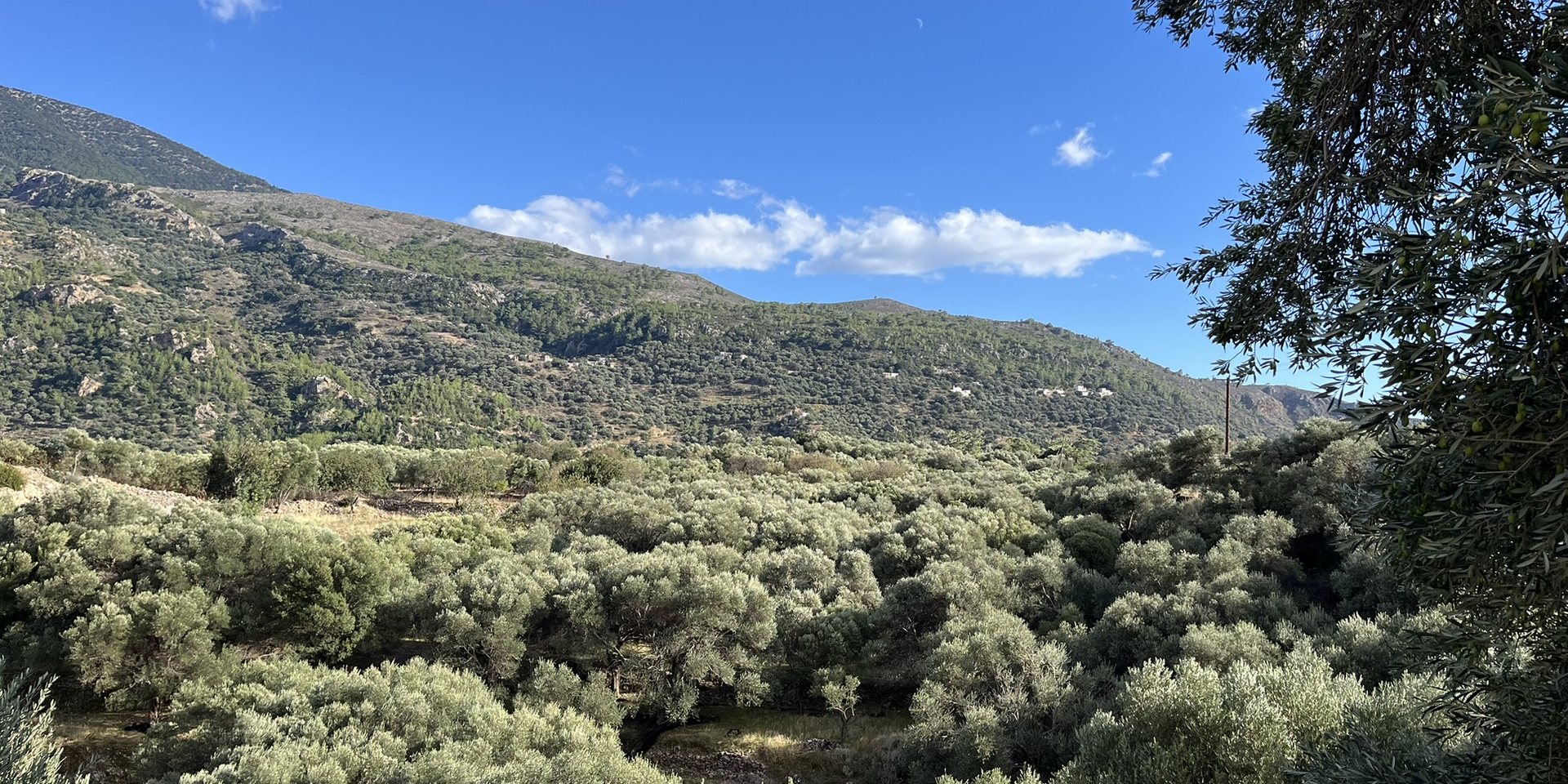
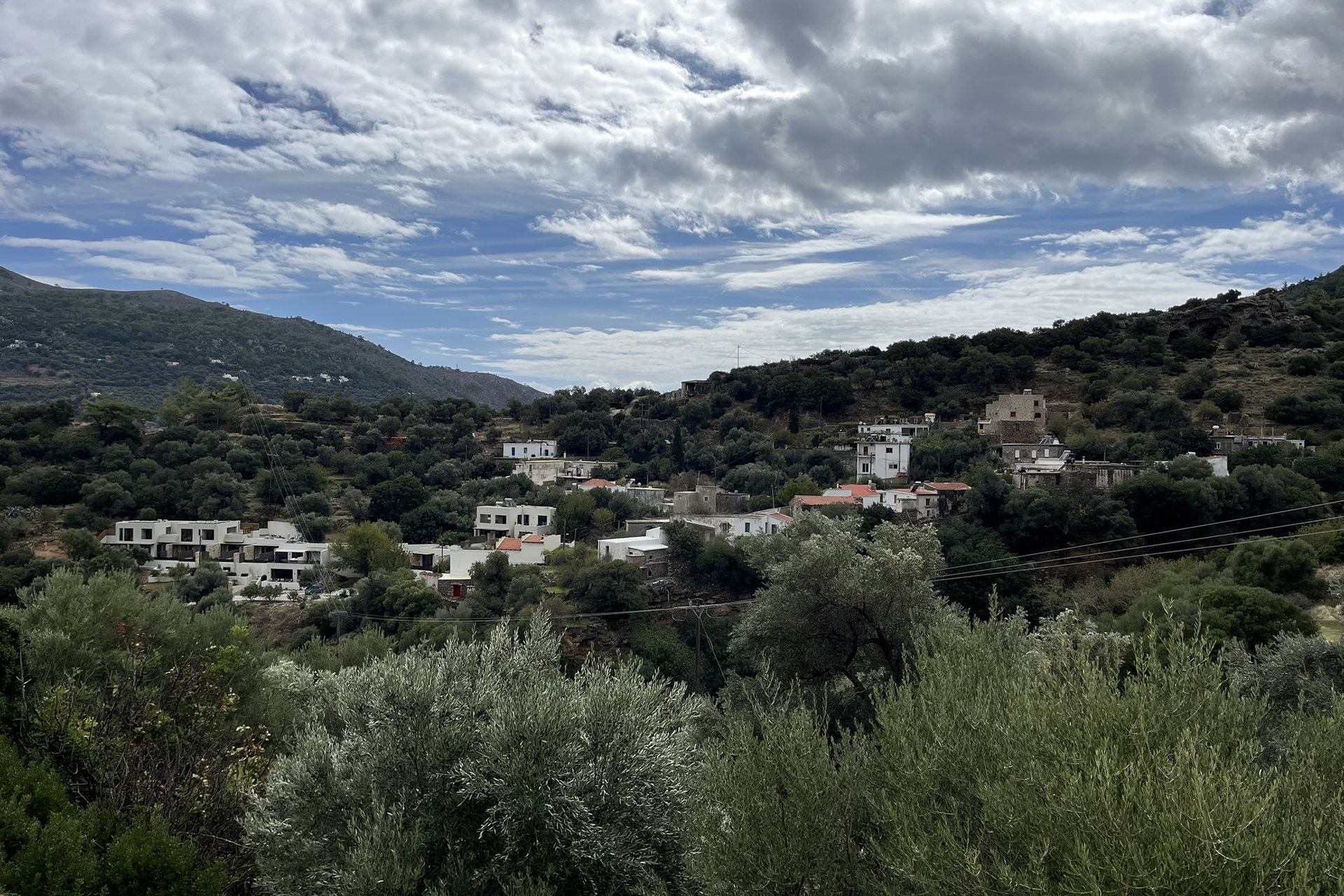
Above Sougia, among olive groves and stone walls, lies a small village where ruins stand between lived-in houses and the gardens still bear fruit.
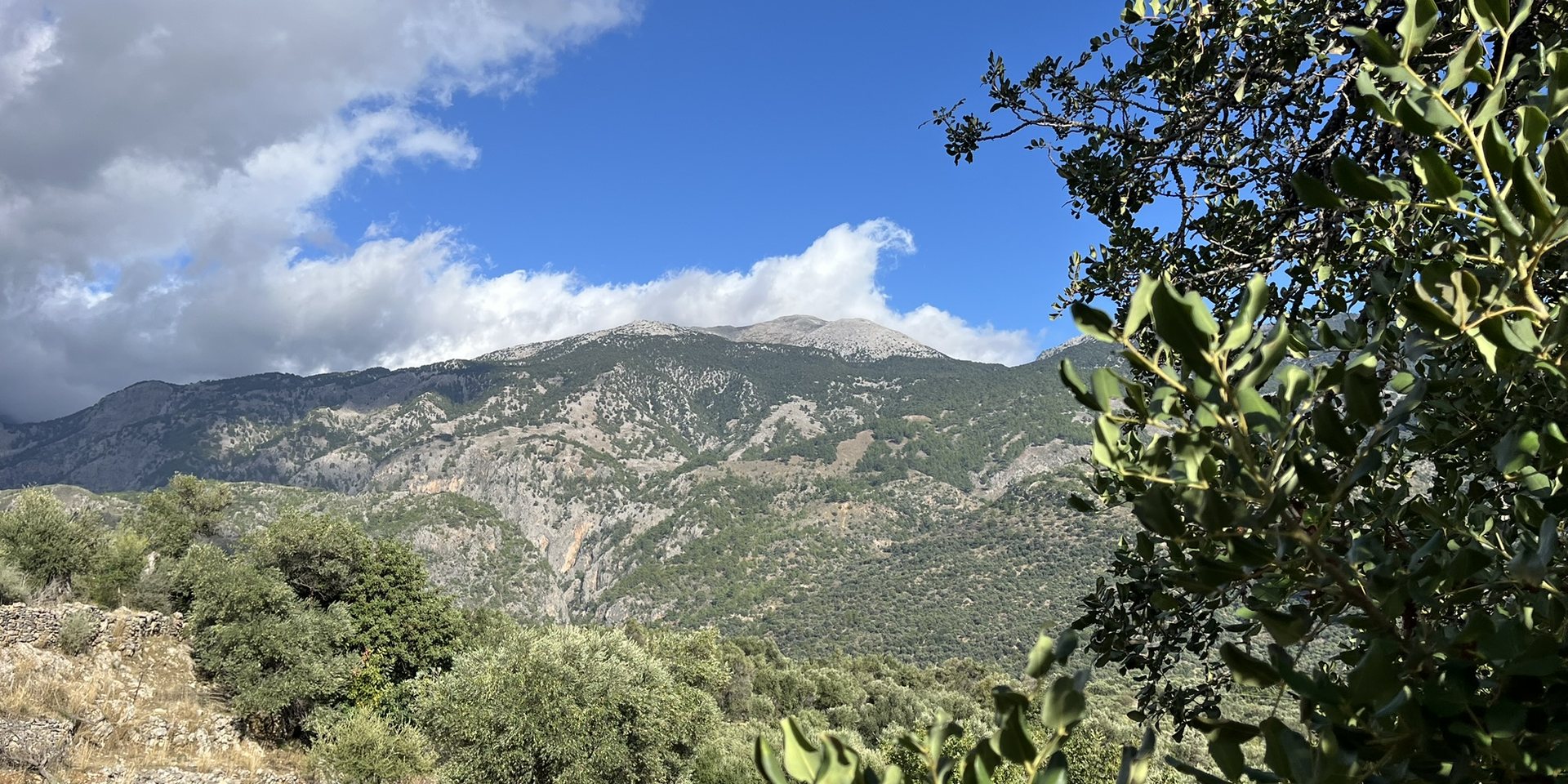
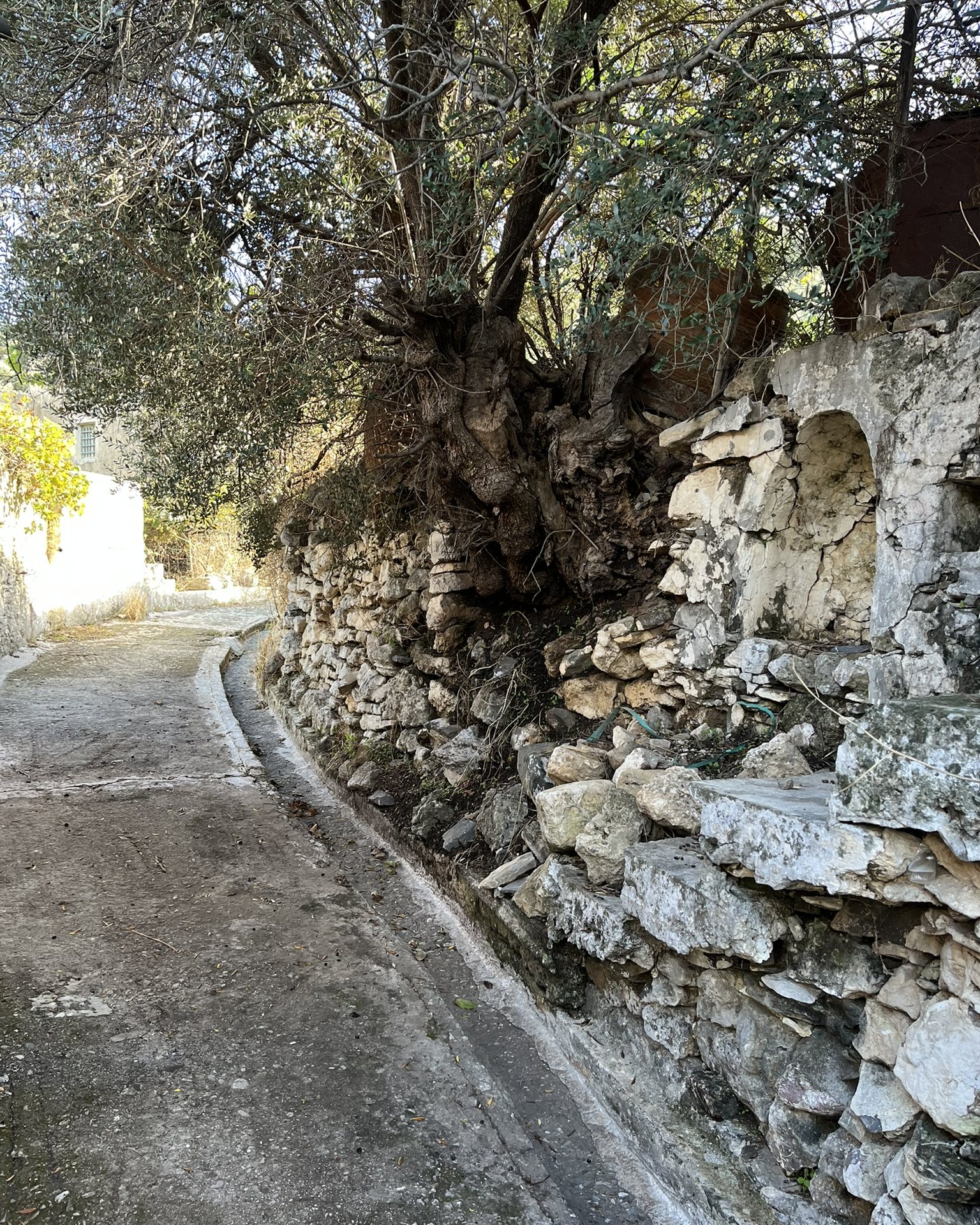
Most people pass Moni on the road and see only a few houses. The village is larger than it looks from there. Leave the road and walk down into the lower lanes, where the old houses stand close together behind dry-stone walls.
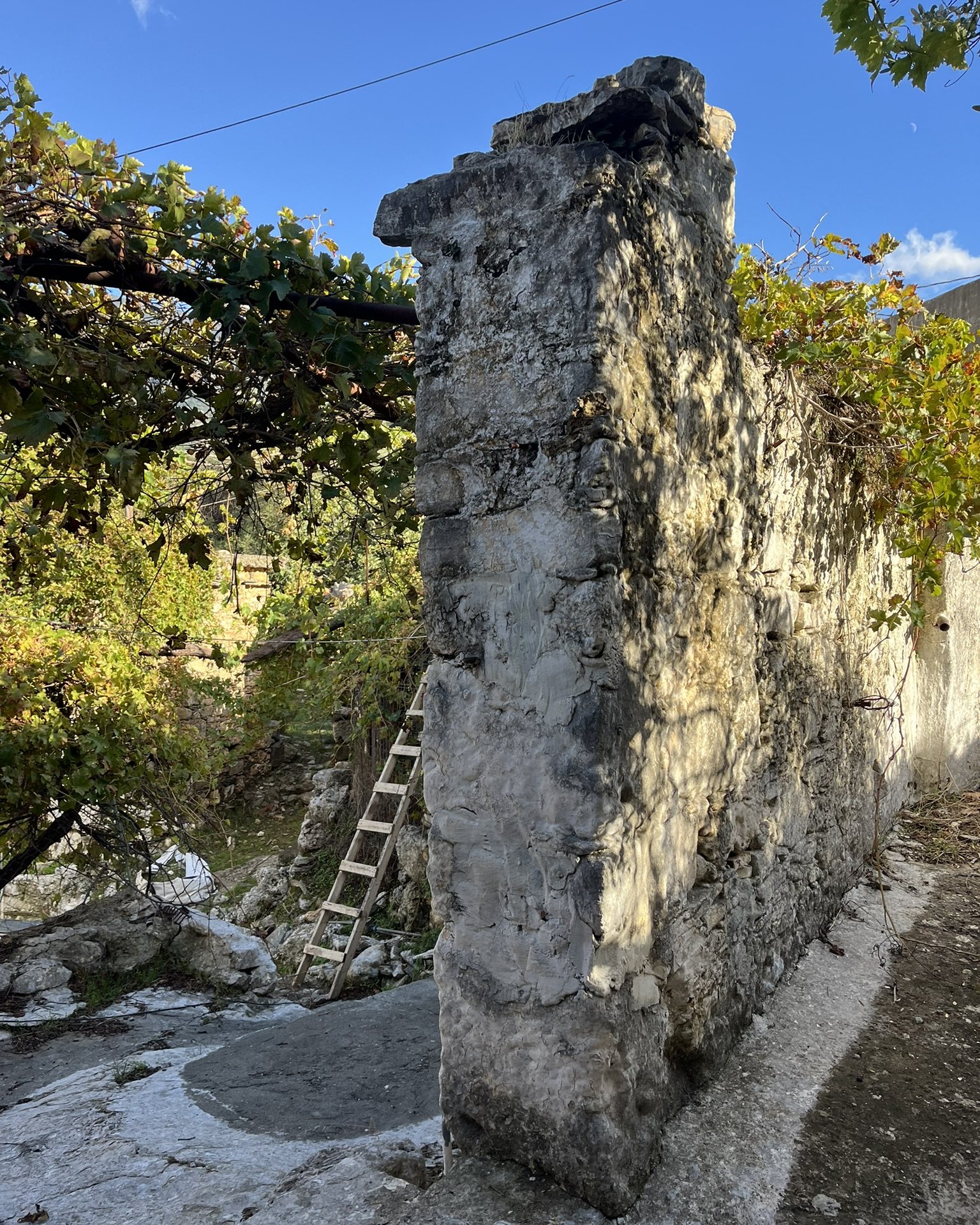
Stone, vines and ruins
Between the houses that are lived in, many are ruins. Walls stand without roofs, a vine grows over a doorway, and a wooden ladder leans against the stones. Other houses have been restored with care, some of them as rooms to rent. Moni is much quieter than Sougia, but in summer it is far from abandoned.
Gardens that still bear fruit
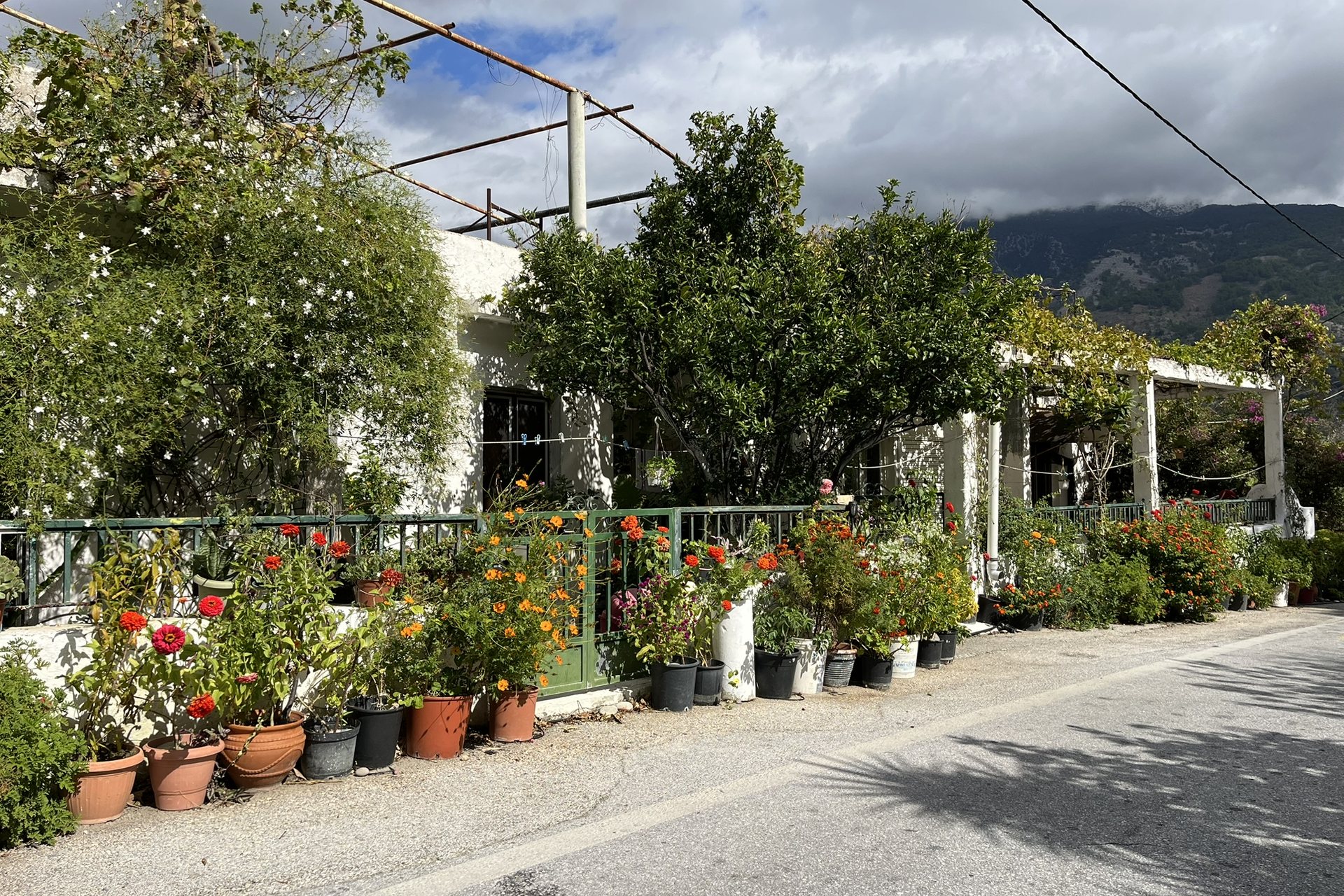
In October the pomegranates split open on the branches, prickly pears line the walls, and there are olive trees in almost every garden. The prickly pears, φραγκόσυκα in Greek, are covered in tiny spines, so even the fruit is best left untouched by bare hands.
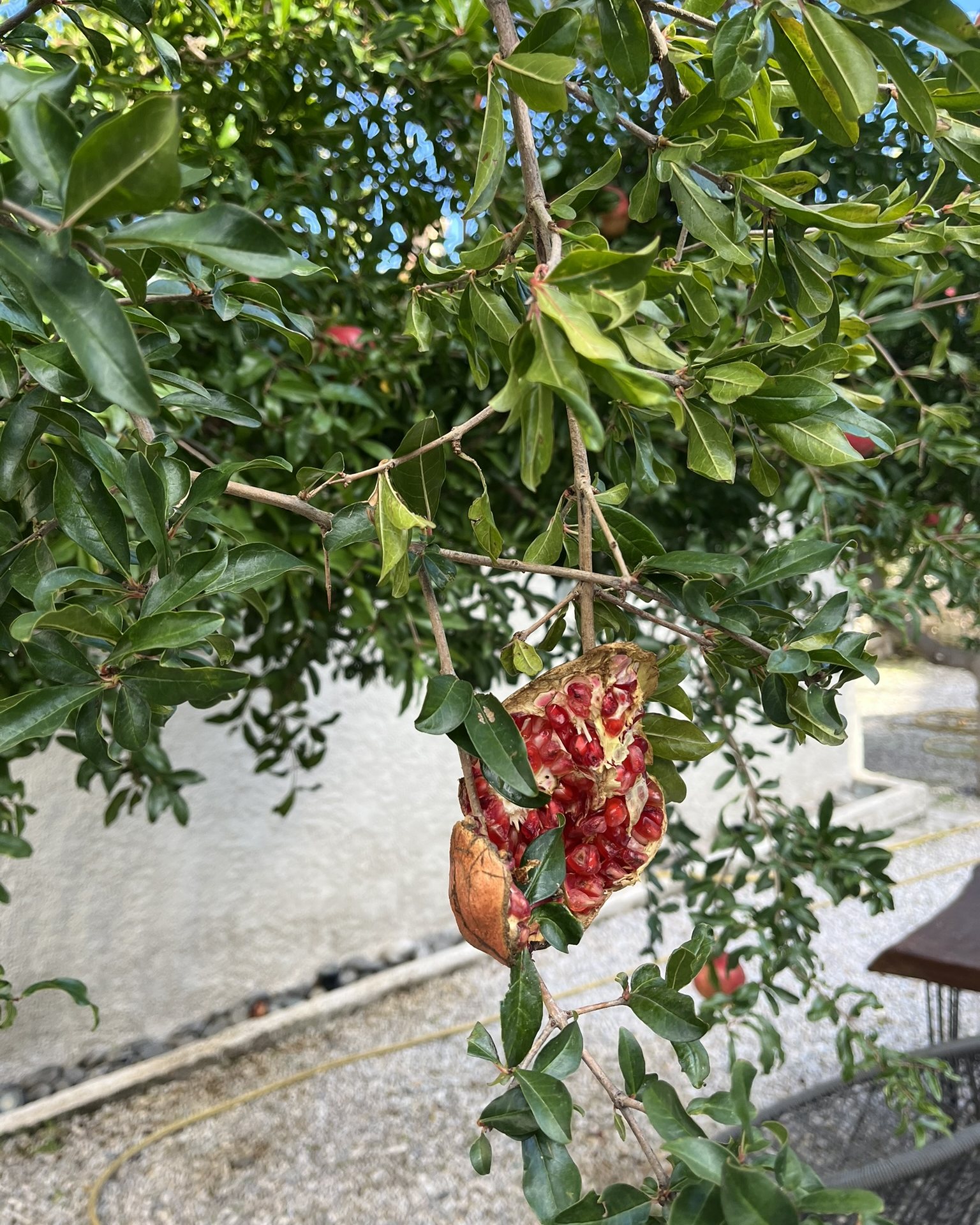
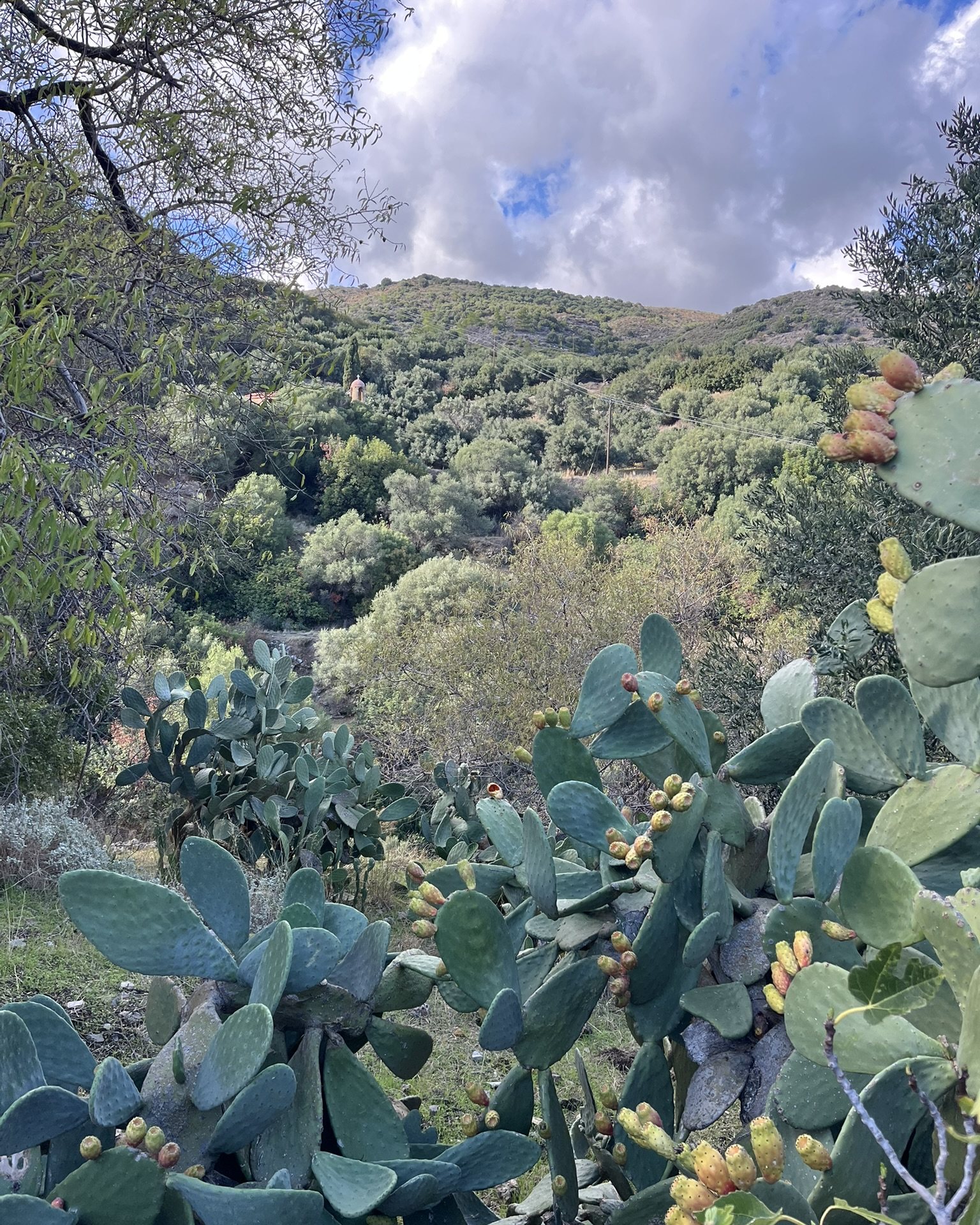
The groves all around the village: Olive season around Sougia: from green to black
A bird on the chimney
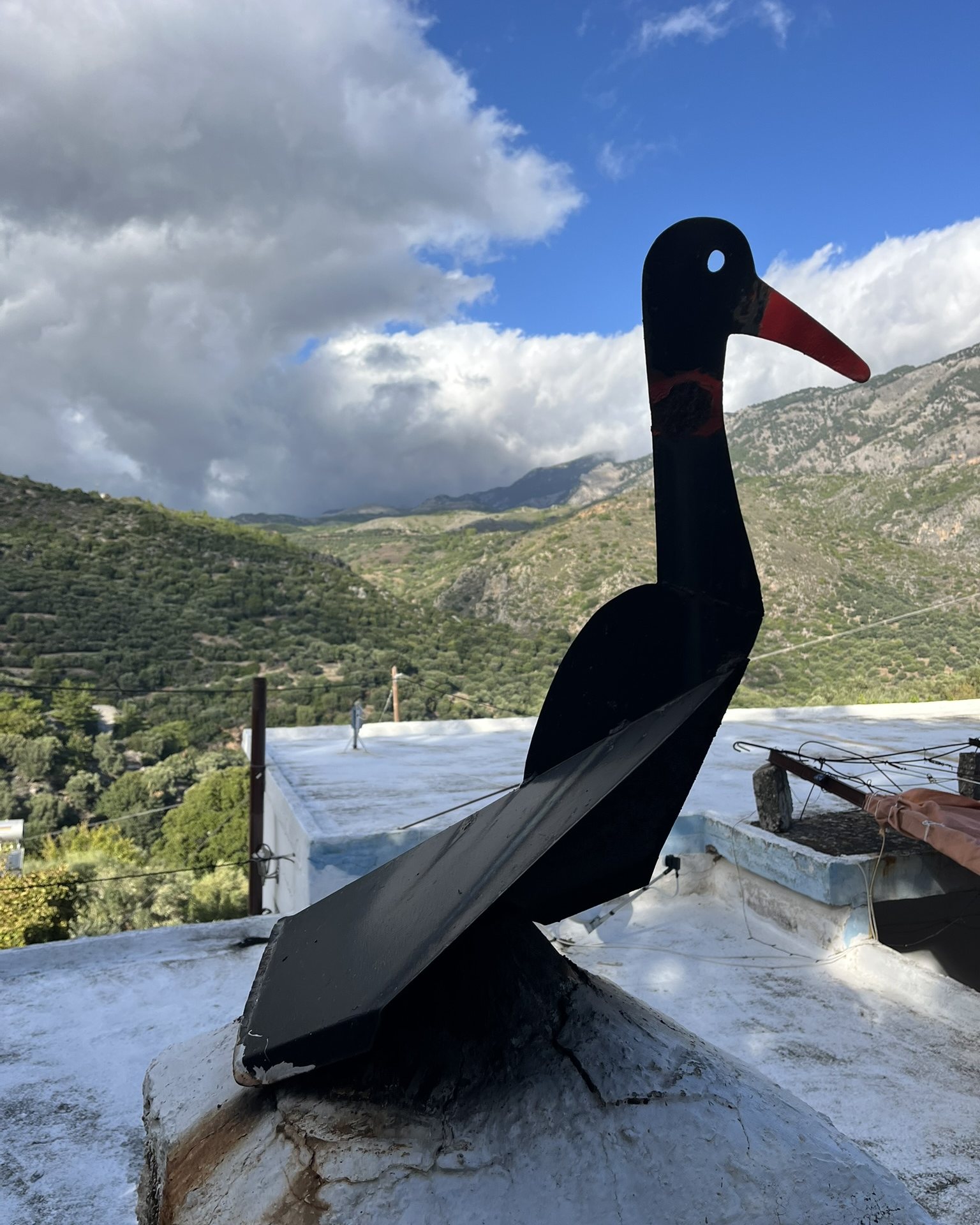
Look up now and then. On one chimney someone has made a black metal bird with a red beak, and it looks out over the valley towards the mountains.
Why there are so many ruins
In 1943, during the German occupation, Moni was burned together with Koustogerako and Livadas, in reprisal for the local resistance. The 2021 census counted eight permanent residents. In summer there are more people: guests in the rooms to rent and at a small luxury retreat with private pools. And there is a village taverna, An to Petyxeis, for a drink or a meal.
Around the village
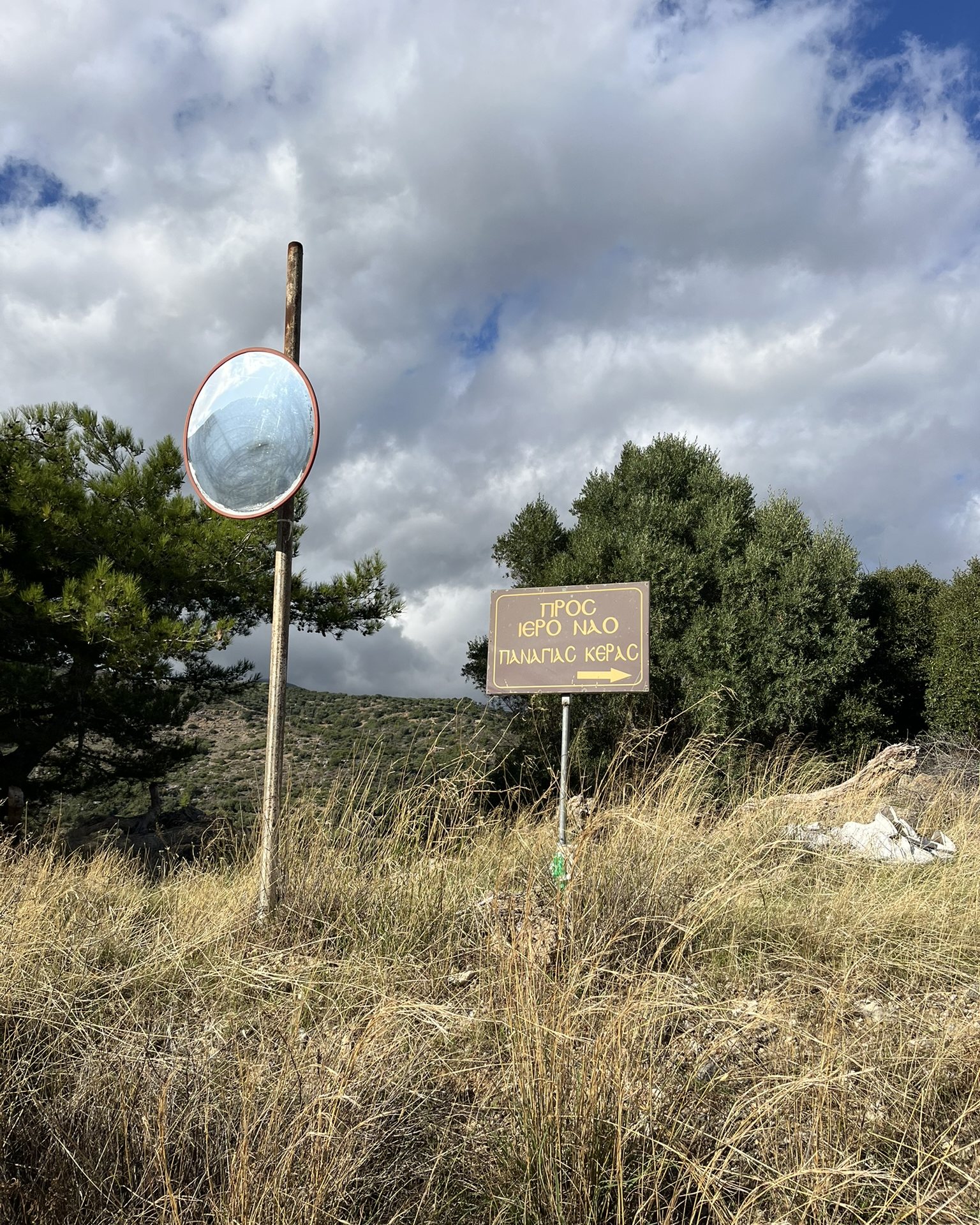
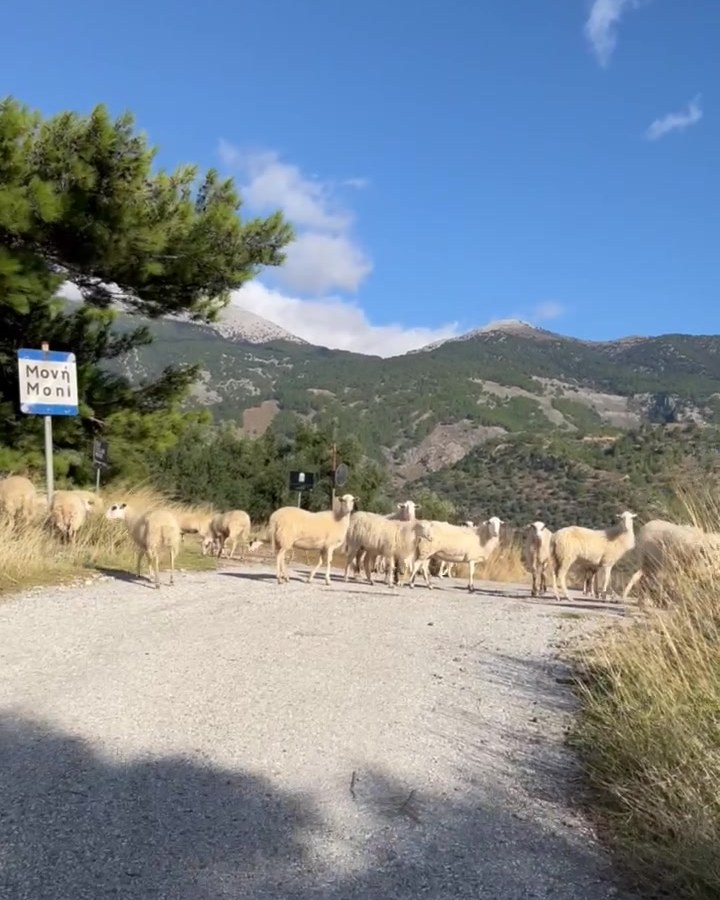
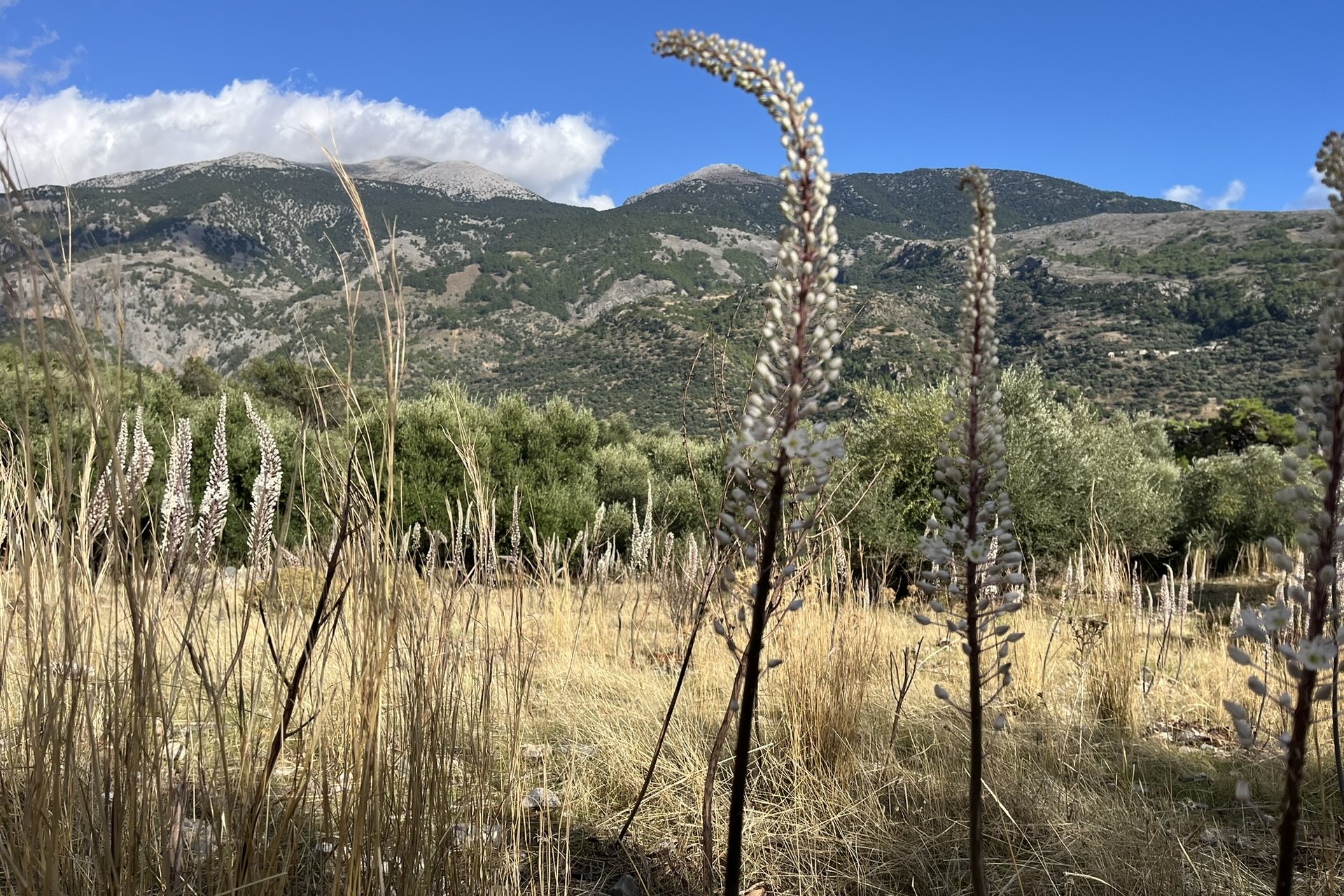
A sign in the village points the way to the church of Panagia Kera. On the road below, sheep cross from one field to the next, and in autumn the dry ground is full of sea squill, tall white spikes of flowers that open in September and October.
Two churches
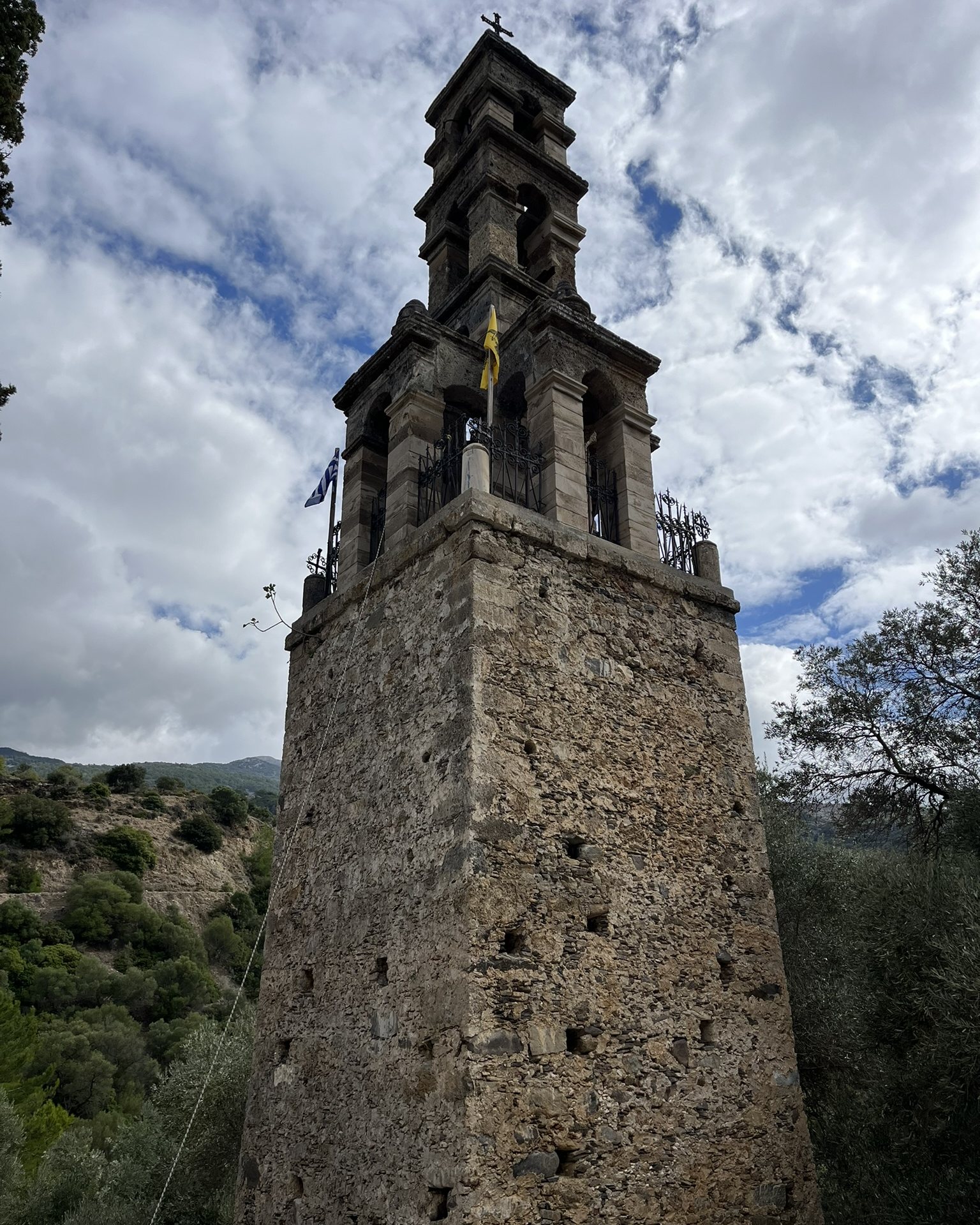
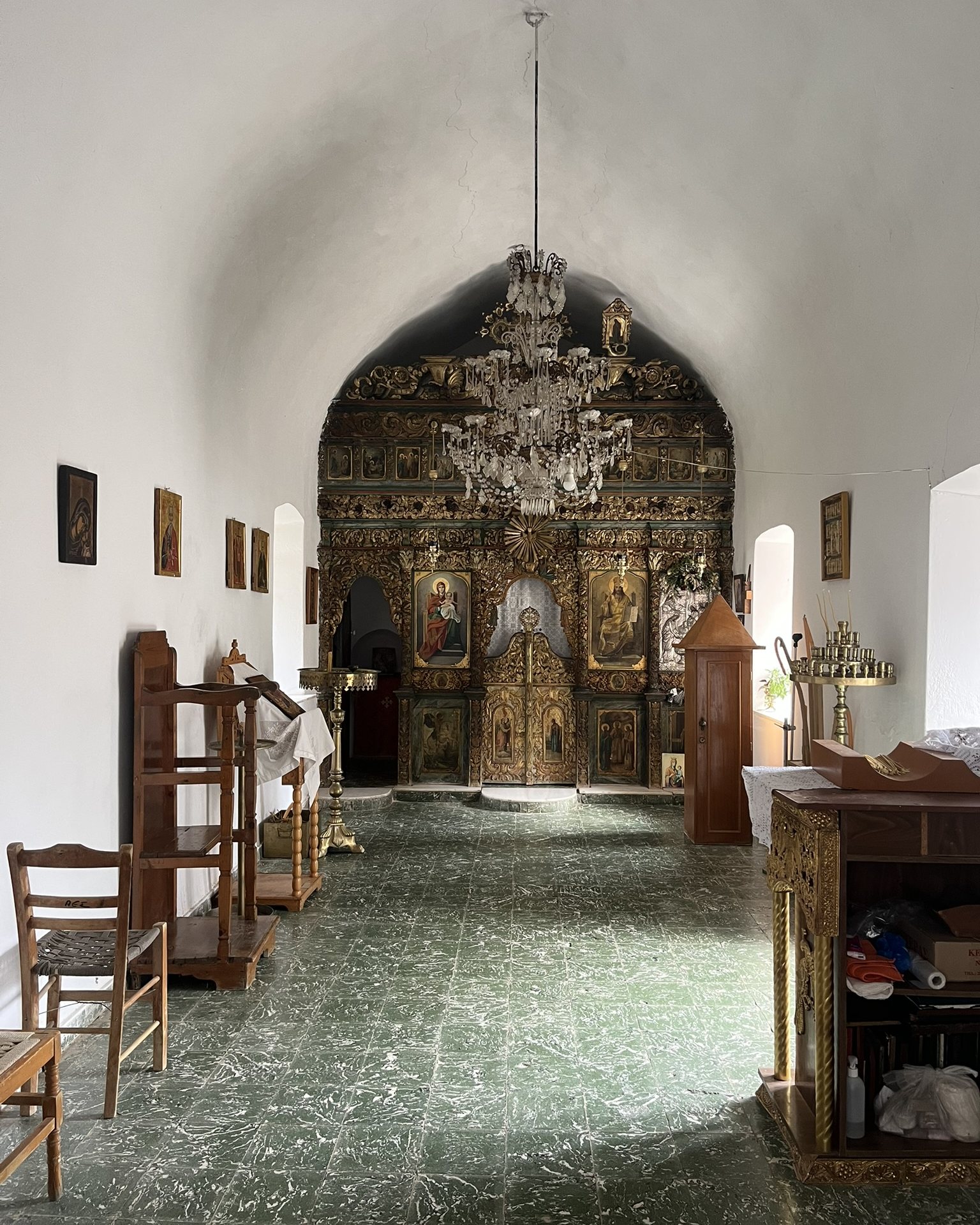
Moni has two churches worth the walk. Panagia Kera stands in the village, on the road along the riverbed, among olive and orange trees. It was once a convent for nuns. Its stone bell tower, about 20 metres high, was built at the start of the 20th century. The church celebrates its feast on 8 September.
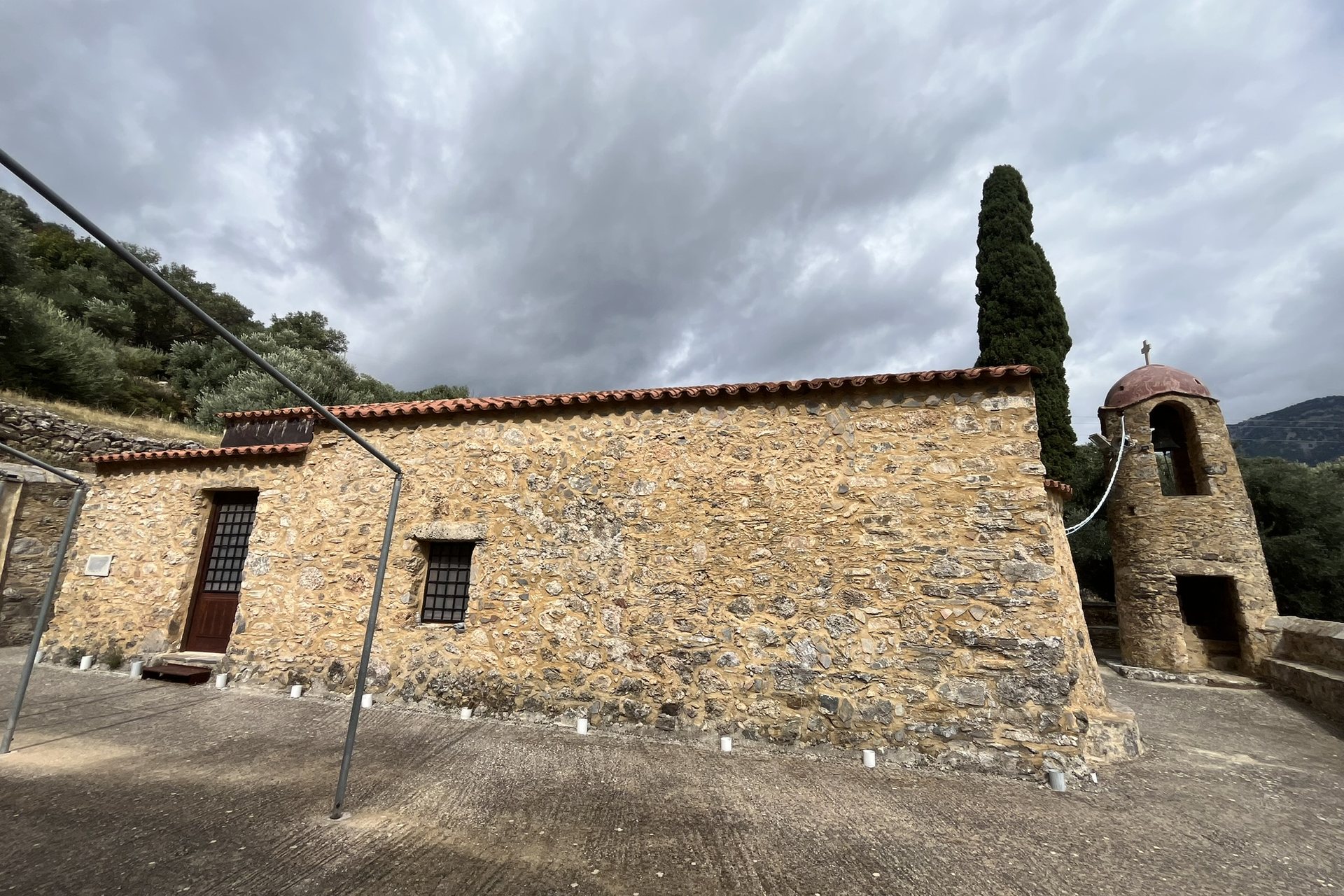
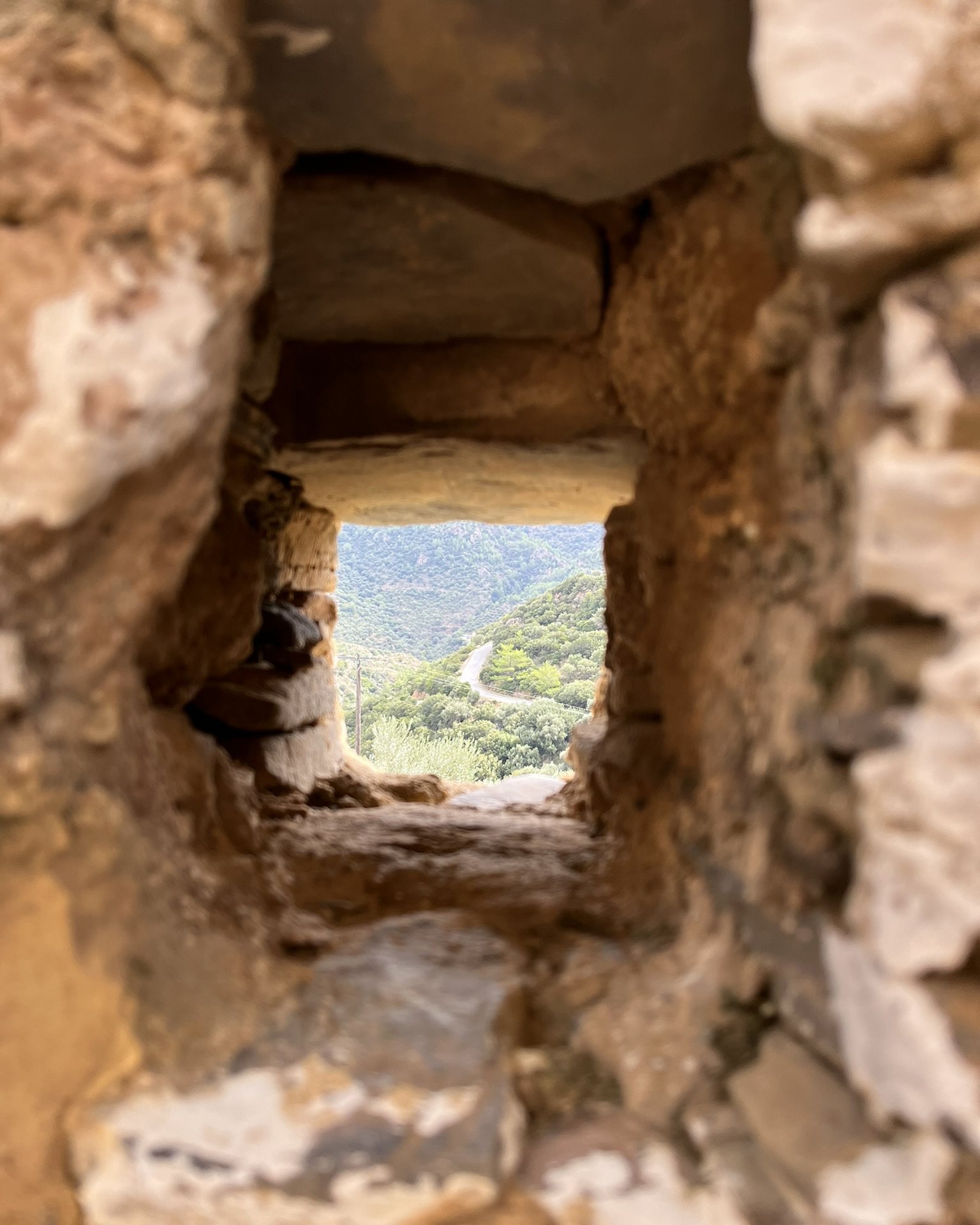
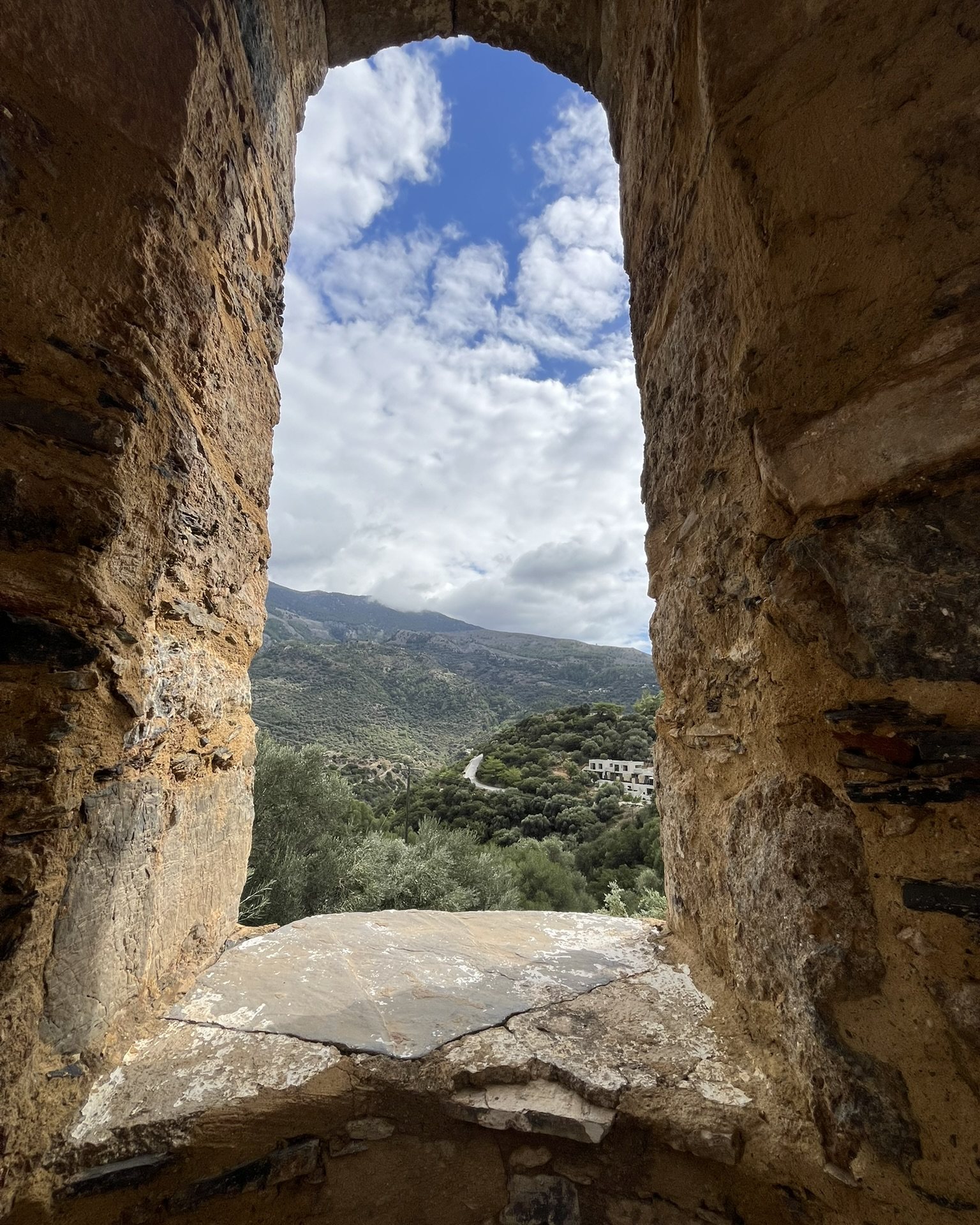
Agios Nikolaos stands alone in the fields north-east of the village. Its older eastern part was painted at the end of the 13th century by Theodoros-Daniel Veneris. The western part was added later and painted in 1315 by Ioannis Pagomenos, one of the best-known painters of western Crete, with saints and a large Last Judgement. The frescoes were cleaned and restored in 2006–2007. The church is usually locked. The small round bell tower beside it was open when we visited, and its narrow windows frame the valley and the road down to Sougia.
The pyramid on the way down
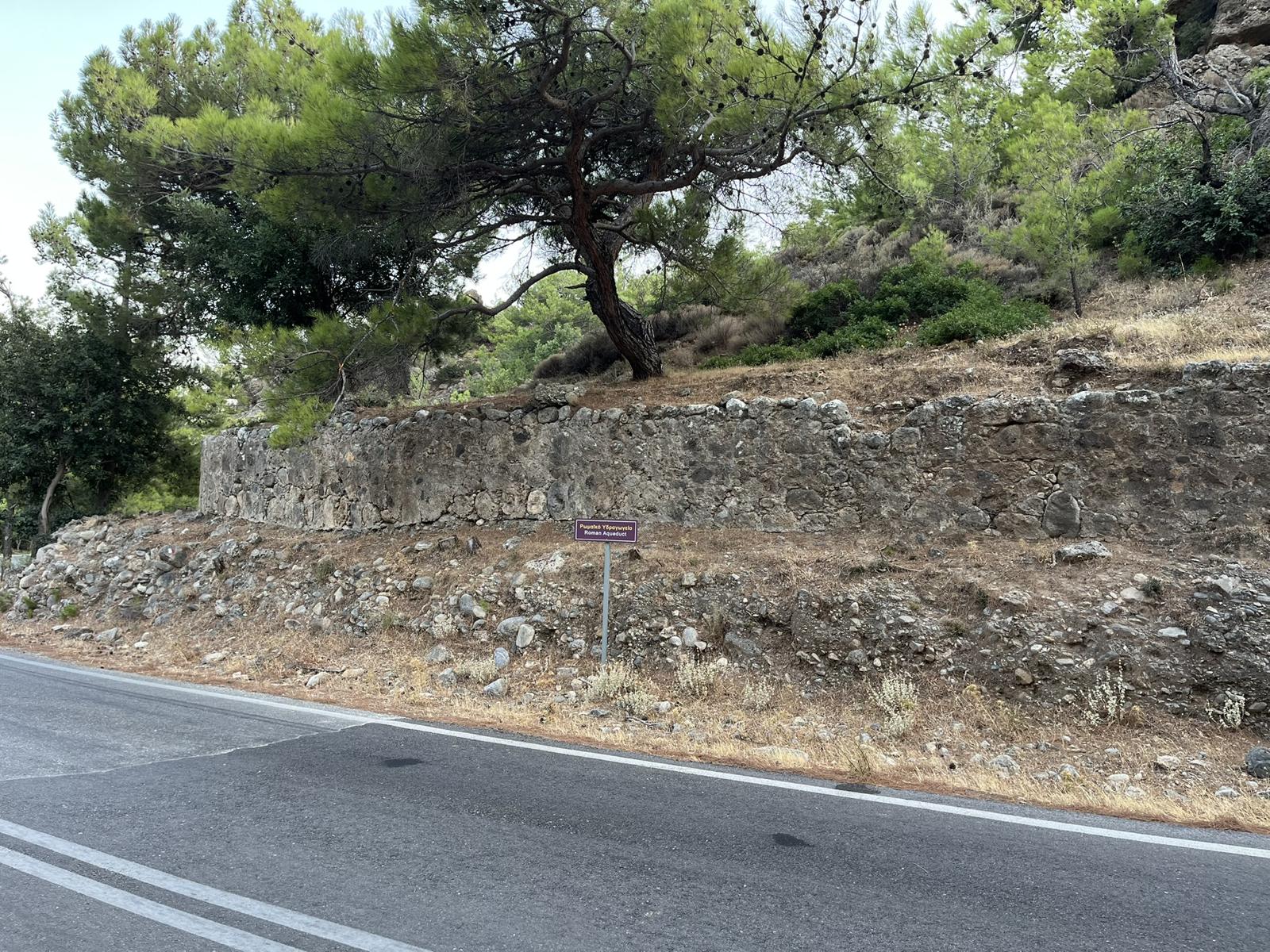
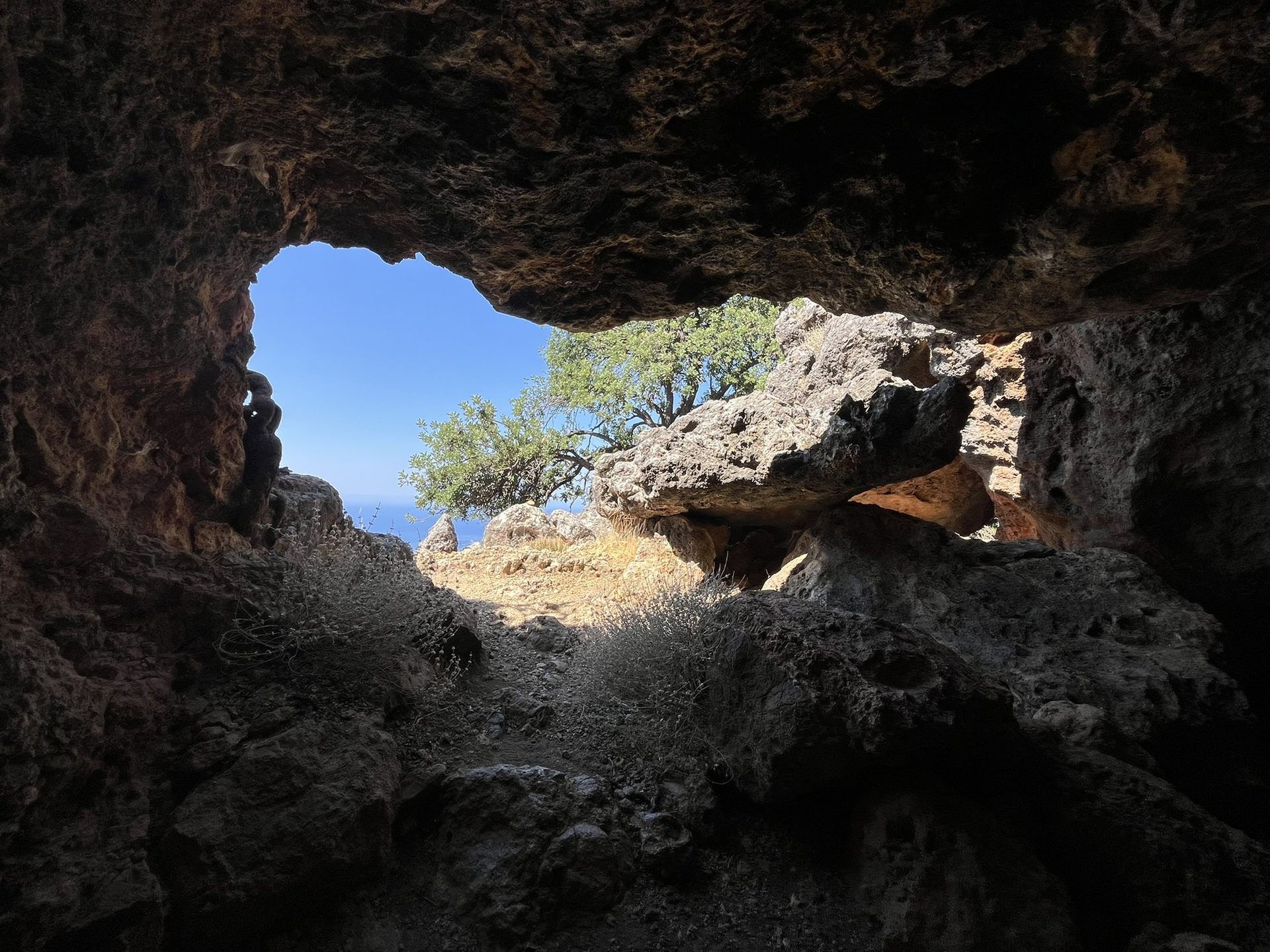
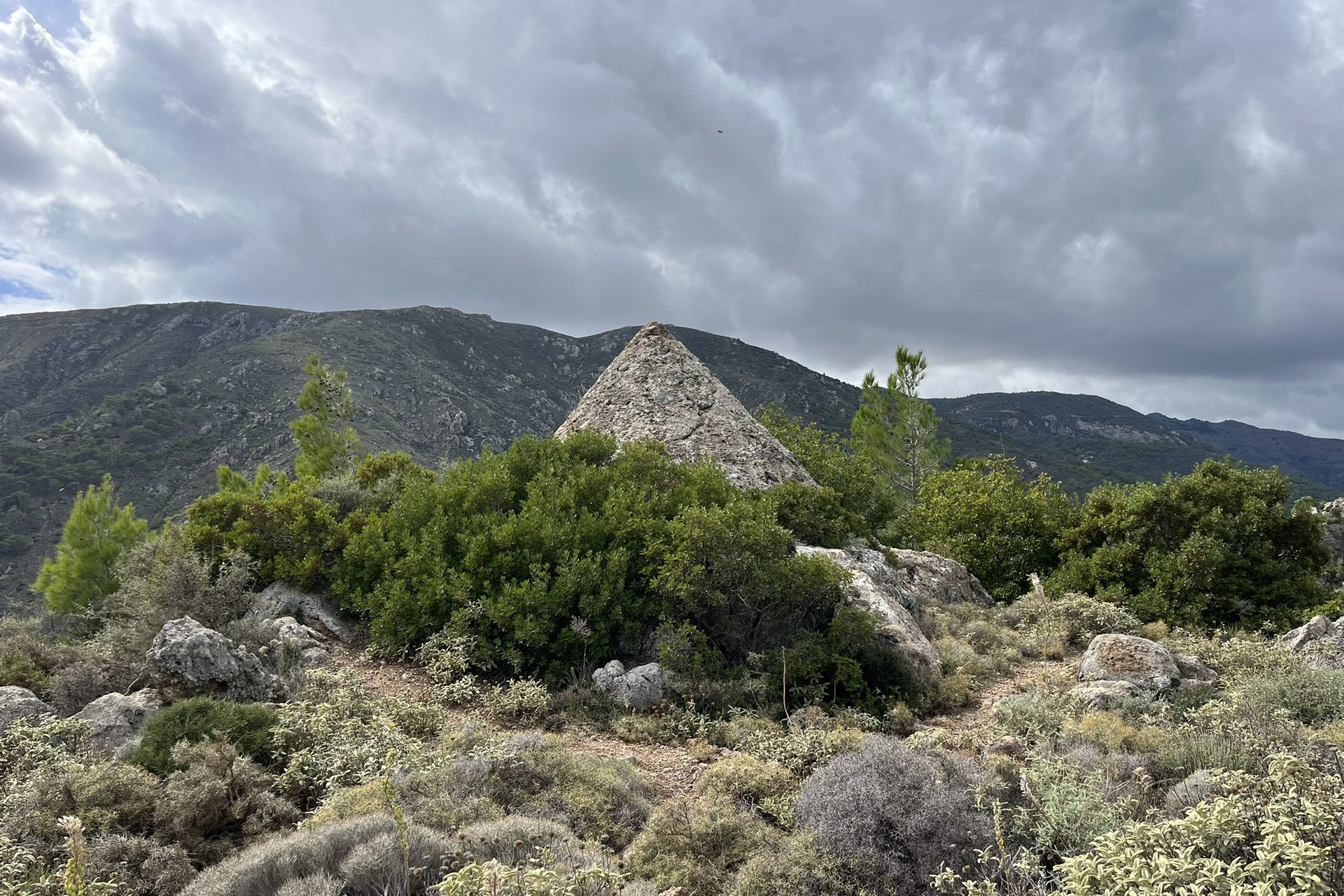
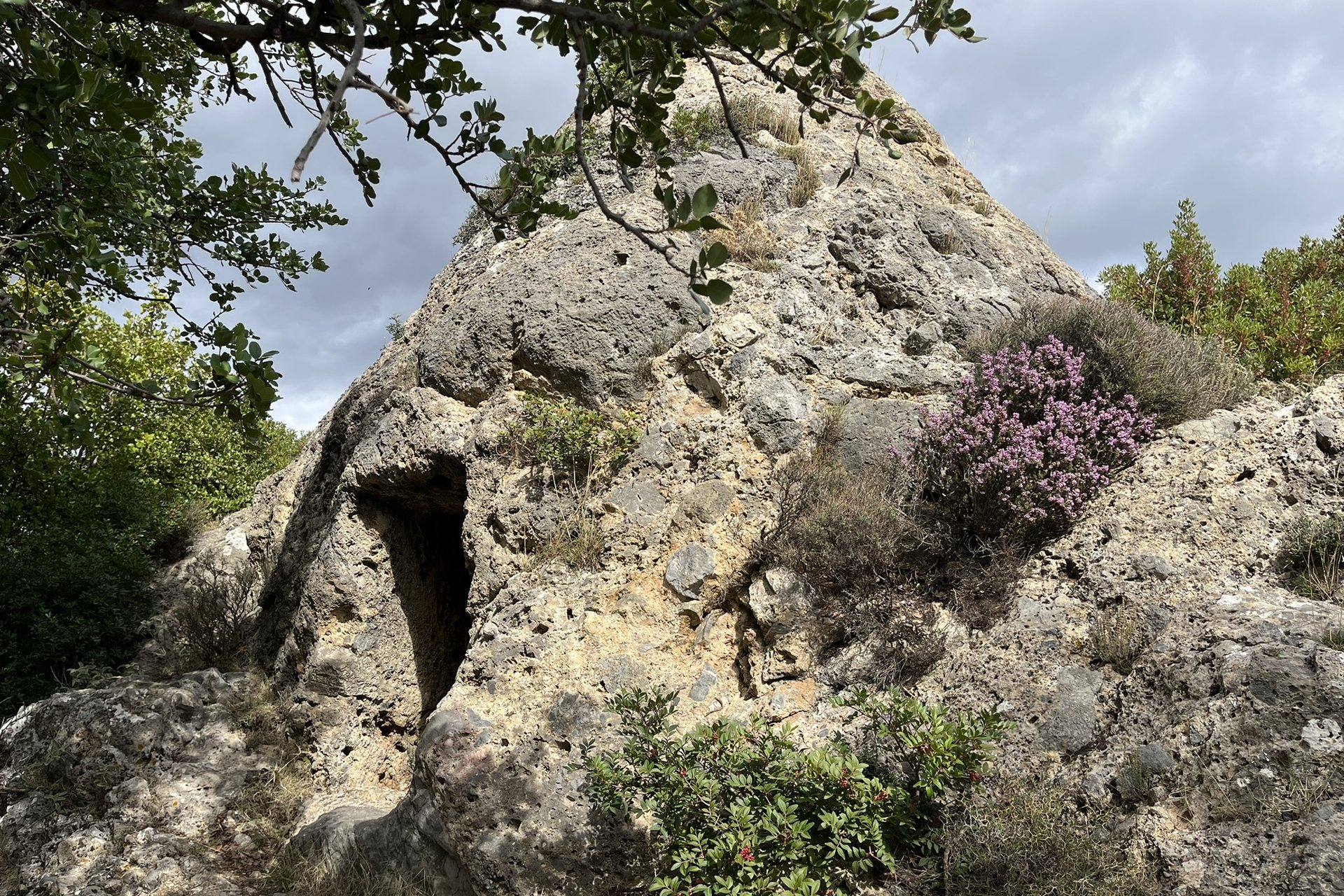
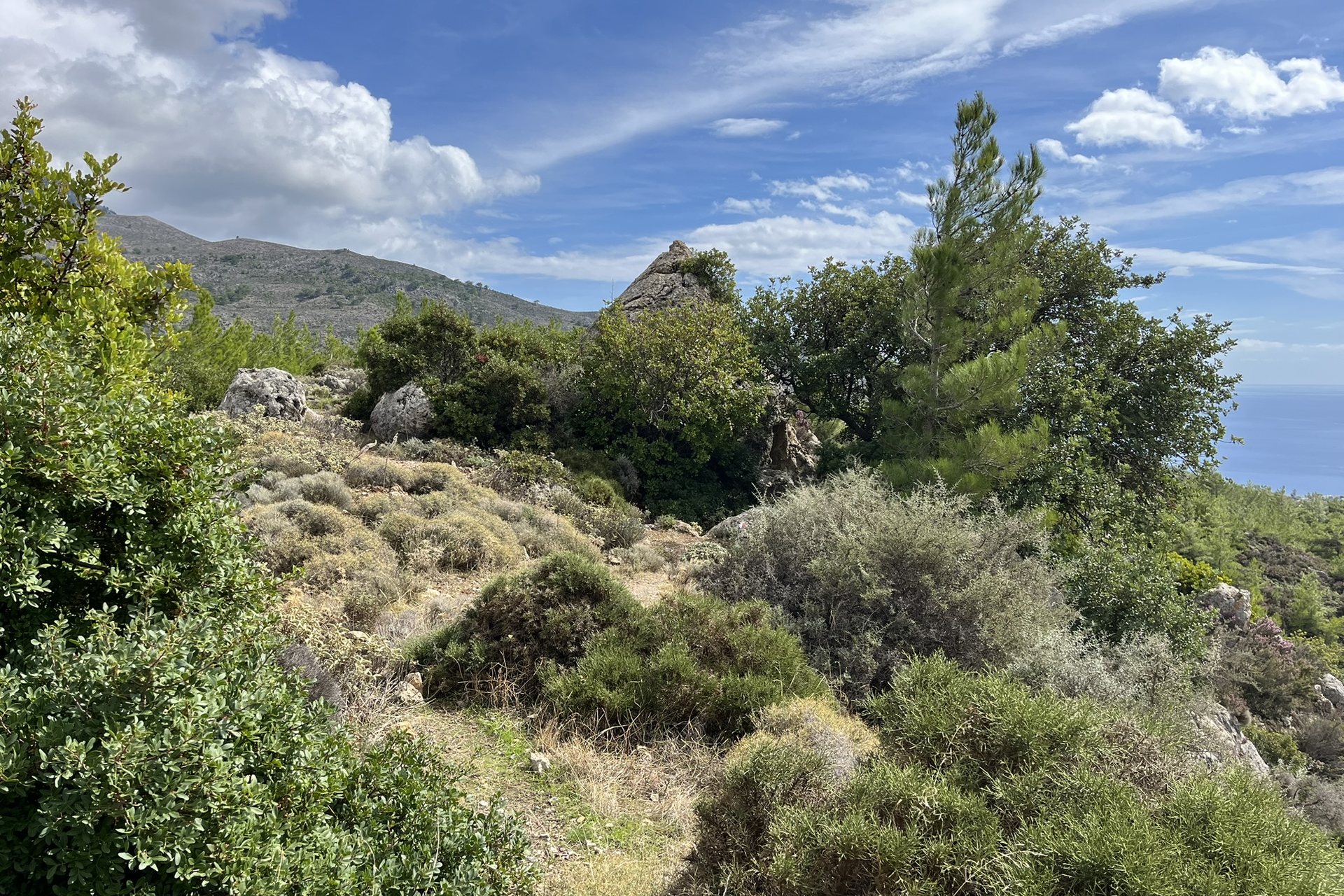
On the hillside between Sougia and Moni, at about 290 metres, a stone cone rises out of the scrub. People call it the pyramid of Sougia, though it is round. It stands about 4.6 metres high, with a chamber cut inside, some 2.2 by 2.1 metres, and a low doorway facing west. It is usually dated to Greek or Roman times, but no one is sure what it was. The archaeologist P. Drosinou counts it among the Roman tombs of the eastern provinces, a type with no other known example on Crete. Another explanation is a kiln for pottery, which would fit its local name, φούρνος (fournos), the oven. Nothing found in the chamber has settled the question.
Plants along the way
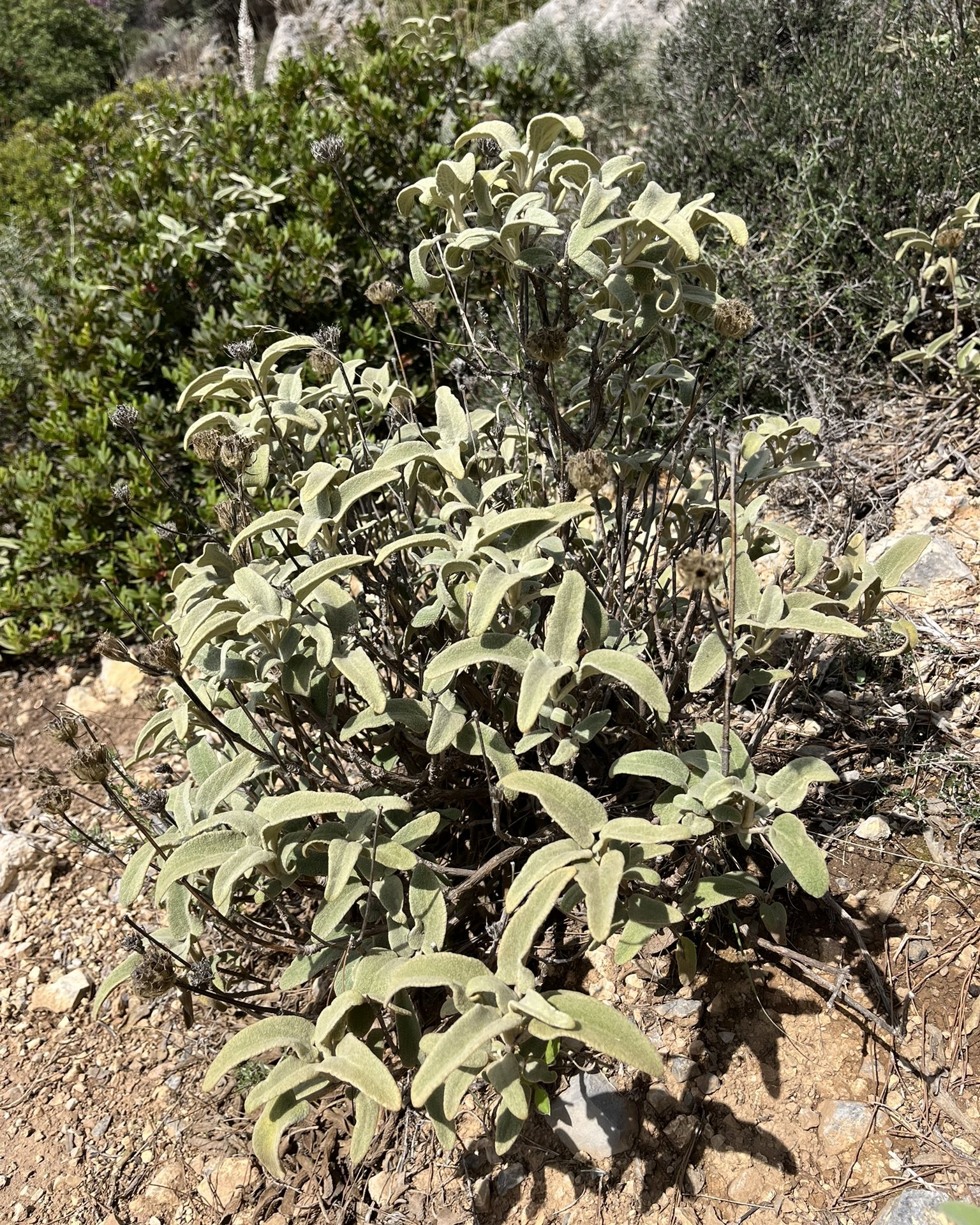
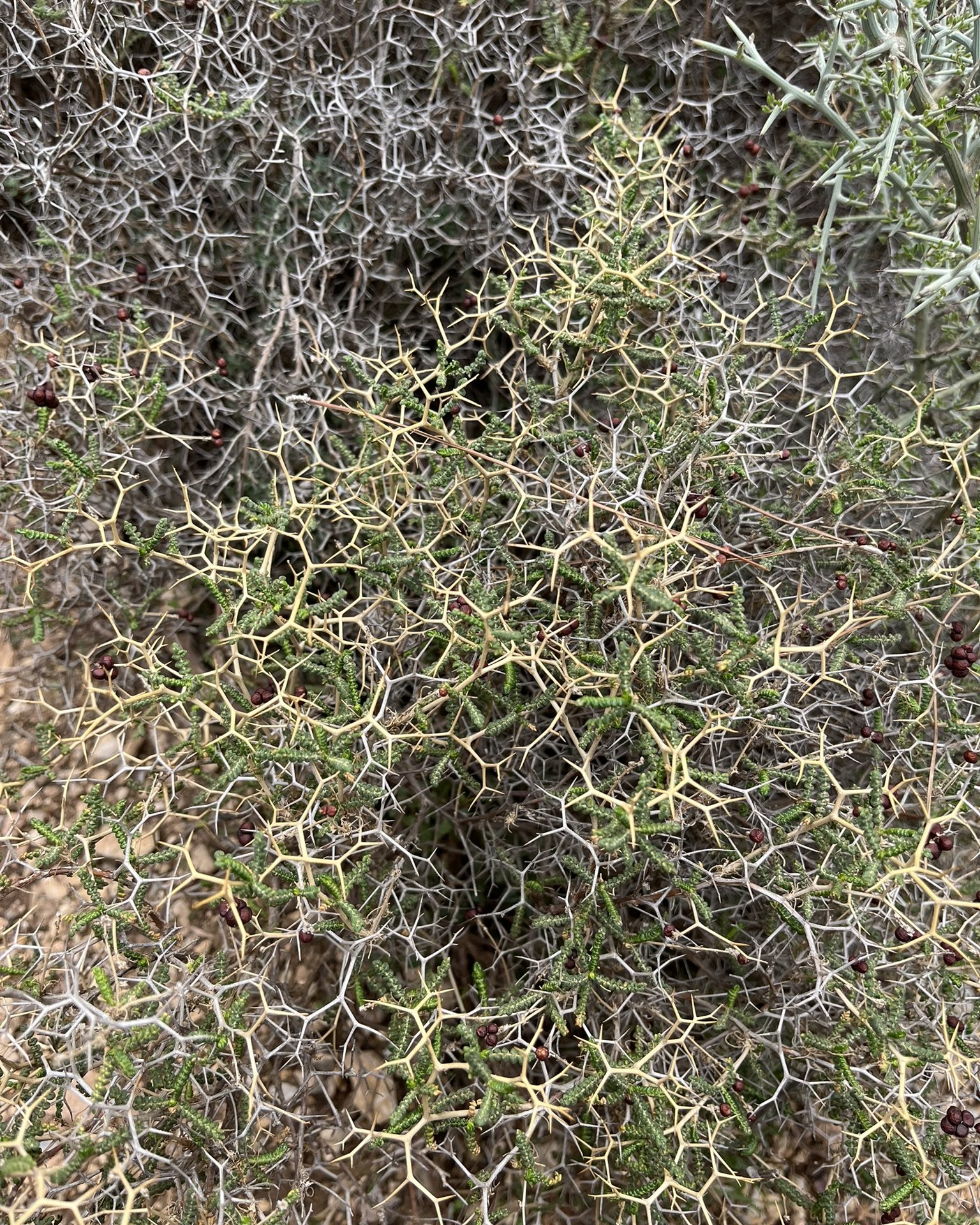
The hillsides here are phrygana, low scrub that lives with sun, wind and goats. Two plants you will brush past on the way. Jerusalem sage, Phlomis fruticosa, has soft grey felt on its leaves and round yellow flower heads in spring, dry and brown by autumn. Thorny burnet, Sarcopoterium spinosum, αστοιβίδα in Greek, has side branches that fork again and again and end in spines. Look closely and the thorns join into a net that seems drawn in hexagons, with small red fruits caught inside.
Please remember
The ruins and gardens belong to families from the village. Look from the lane, keep off the walls, and leave the fruit on the trees.
Questions walkers ask
Where is Moni?
In the hills above Sougia, on the south-west coast of Crete. It is one of the four villages of the community of Sougia, with Sougia itself, Koustogerako and Livadas.
Why are there so many ruins in Moni?
Moni was burned in 1943, during the German occupation, together with Koustogerako and Livadas. Some houses were never rebuilt and stand today between lived-in and restored ones.
Is there anywhere to eat in Moni?
Yes. The village taverna, An to Petyxeis, serves drinks and food. In Sougia, a short drive down the hill, there are many more tavernas.
Can you walk around Moni?
Yes, along the village lanes. The houses, ruins and gardens are private, so enjoy them from the lane.
Sources
- Sougia, Wikipedia
- Drimia maritima (sea squill), Wikipedia
- Information board at Agios Nikolaos, Moni (28th Ephorate of Byzantine Antiquities)
- Monastery of Panagia Kera, Municipality of Kantanos-Selino (in Greek)
- Saint Nicholas church at Moni, cretanbeaches.com
- The pyramid of Sougia, The Standard (in Greek)
- Sarcopoterium spinosum, Cretan Flora
- Our own walk through Moni, October 2026
Last checked October 2026. Times, prices and opening seasons change. Please check before you travel.