The Cyclops cave above Sougia: a walk into the Odyssey
Nolan filmed his Cyclops in the Peloponnese. Crete has its own candidate, two hours’ walk from Koustogerako.
This summer Christopher Nolan’s The Odyssey reached cinemas, with Matt Damon as Odysseus and a Cyclops built from puppetry and animatronics. The Cyclops scenes were filmed in Nestor’s Cave at Voidokilia, in the Peloponnese. But where was the real cave, if there ever was one? Homer never says. Several places claim it: Sicily, Maroneia in northern Greece, and Crete. The Cretan one is in the hills above Sougia.
Stay where this walk begins: AVYSSOS plans to open in Sougia in 2027
The story
In Book 9 of the Odyssey, Odysseus and his men land on the island of the Cyclopes, one-eyed giants who keep sheep and obey no law. They walk into a cave full of cheeses and lambs and wait for the owner. He is Polyphemus, son of Poseidon. He rolls a huge stone across the entrance and starts to eat the visitors, two at a time.
Odysseus gives him strong wine and tells him his name is “Nobody”. When the giant falls asleep, the men drive a burning stake into his only eye. Polyphemus screams for help, but when the other Cyclopes ask who is hurting him, he answers: “Nobody.” In the morning the men escape tied under the bellies of his rams. Poseidon never forgives Odysseus, and that is a large part of why his journey home takes ten years.
The walk
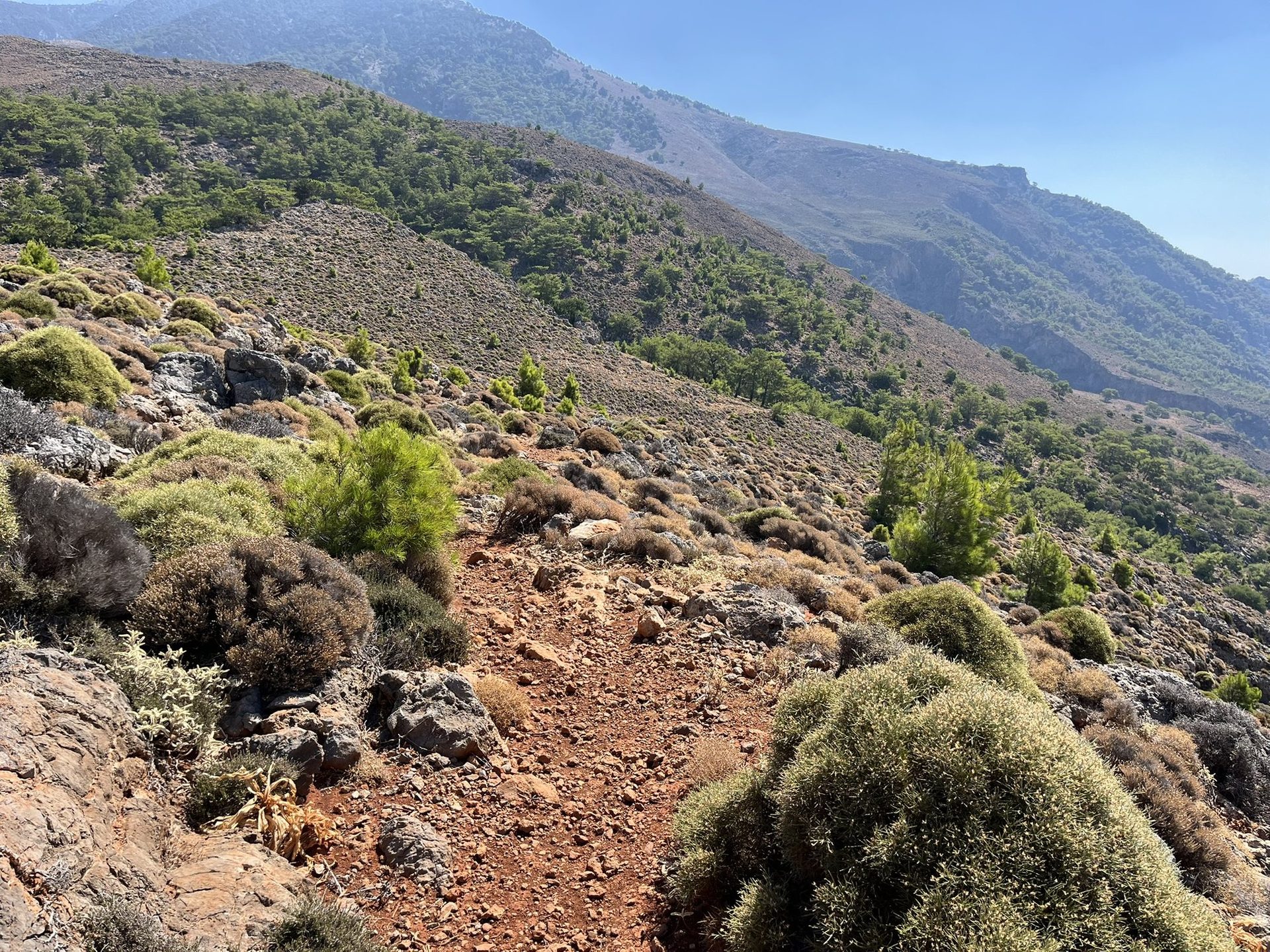
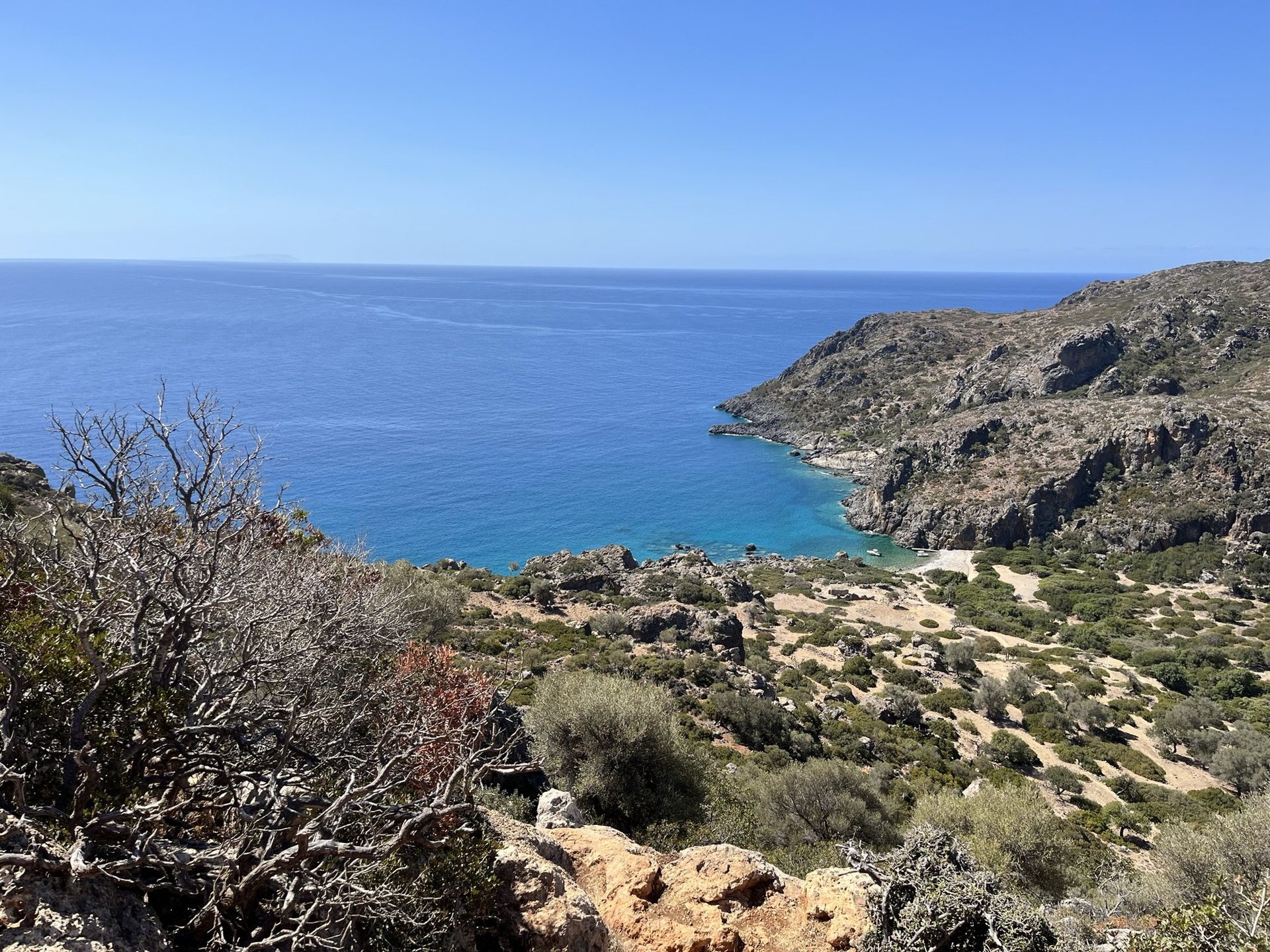
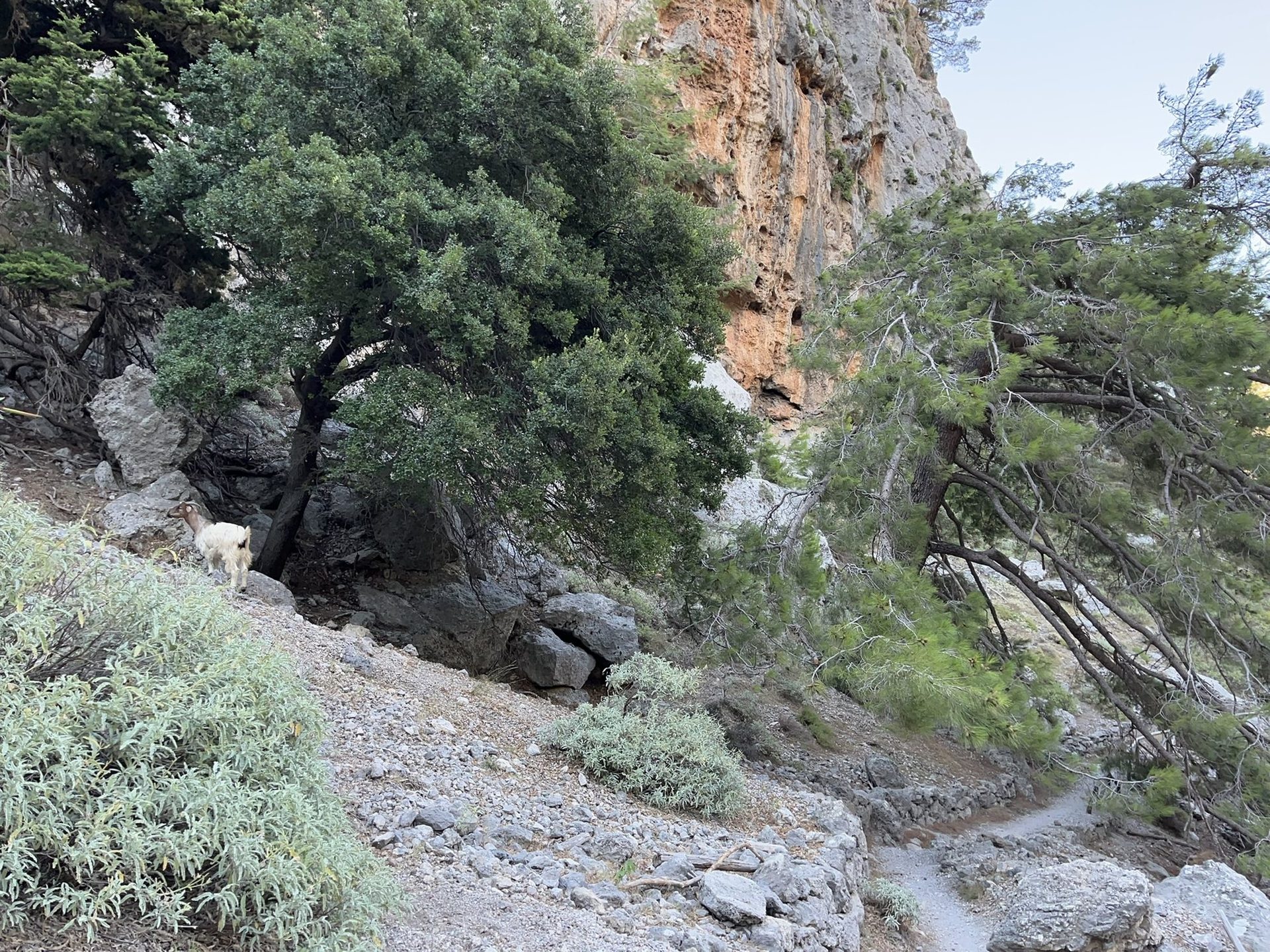
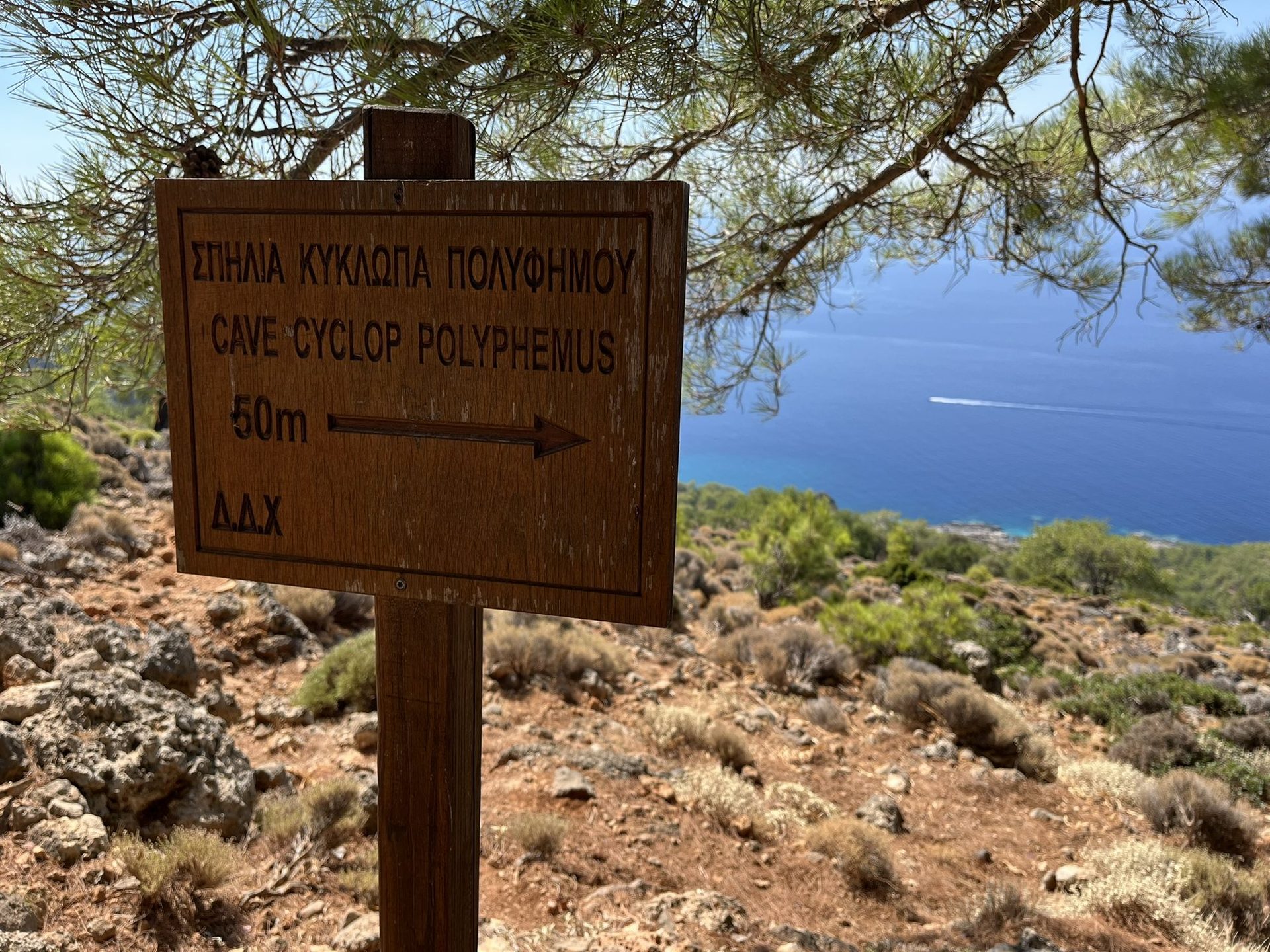
The path starts at Koustogerako, a mountain village above Sougia, and takes about two hours each way. It runs along open slopes of rock and low scrub, through patches of pine, with long views down to the sea. The Forest Service has signposted it all the way, and near the end a board tells the story of Polyphemus in Greek and English.
More walks from the village: wind, walks & gorges
The cave
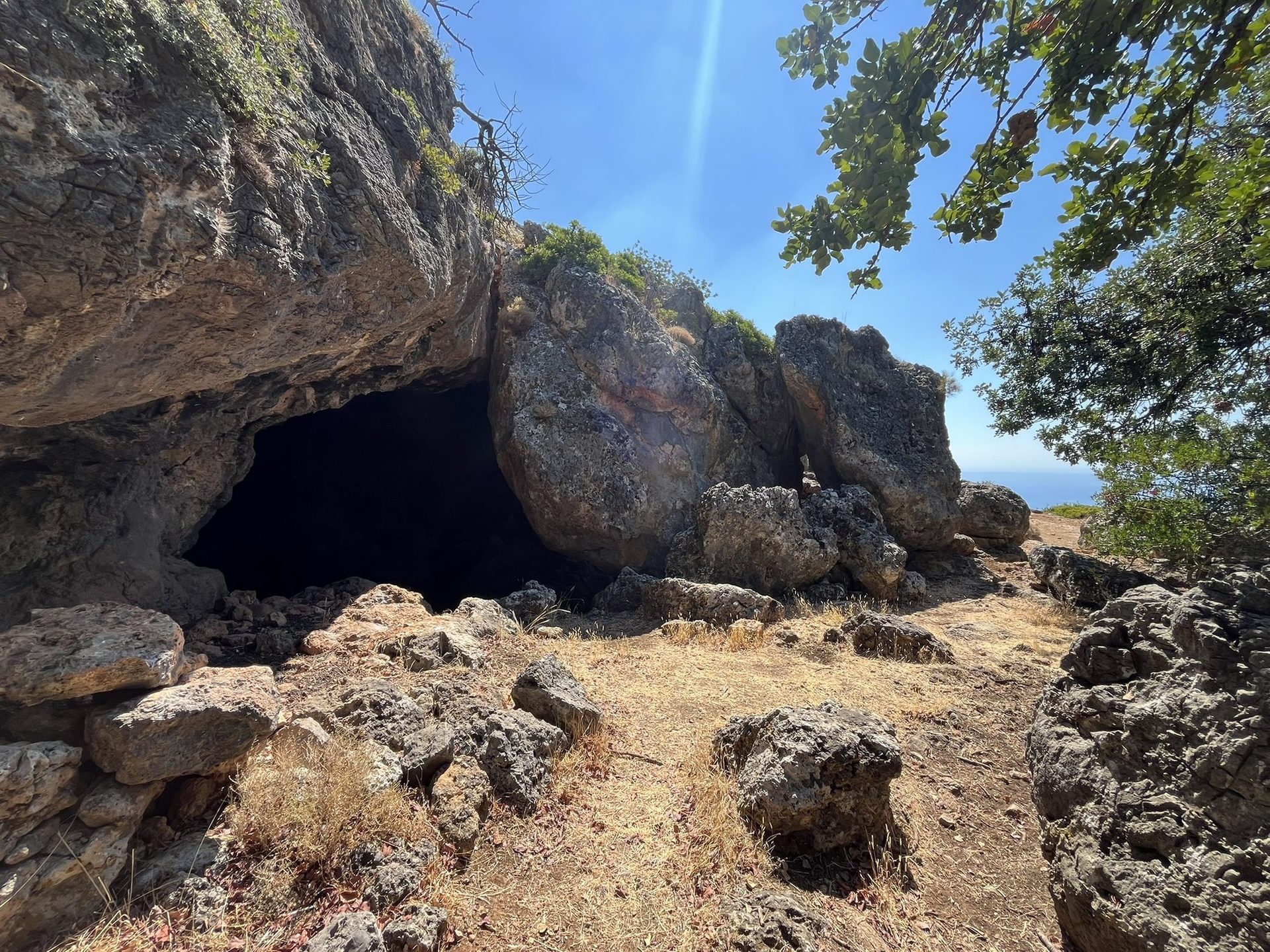
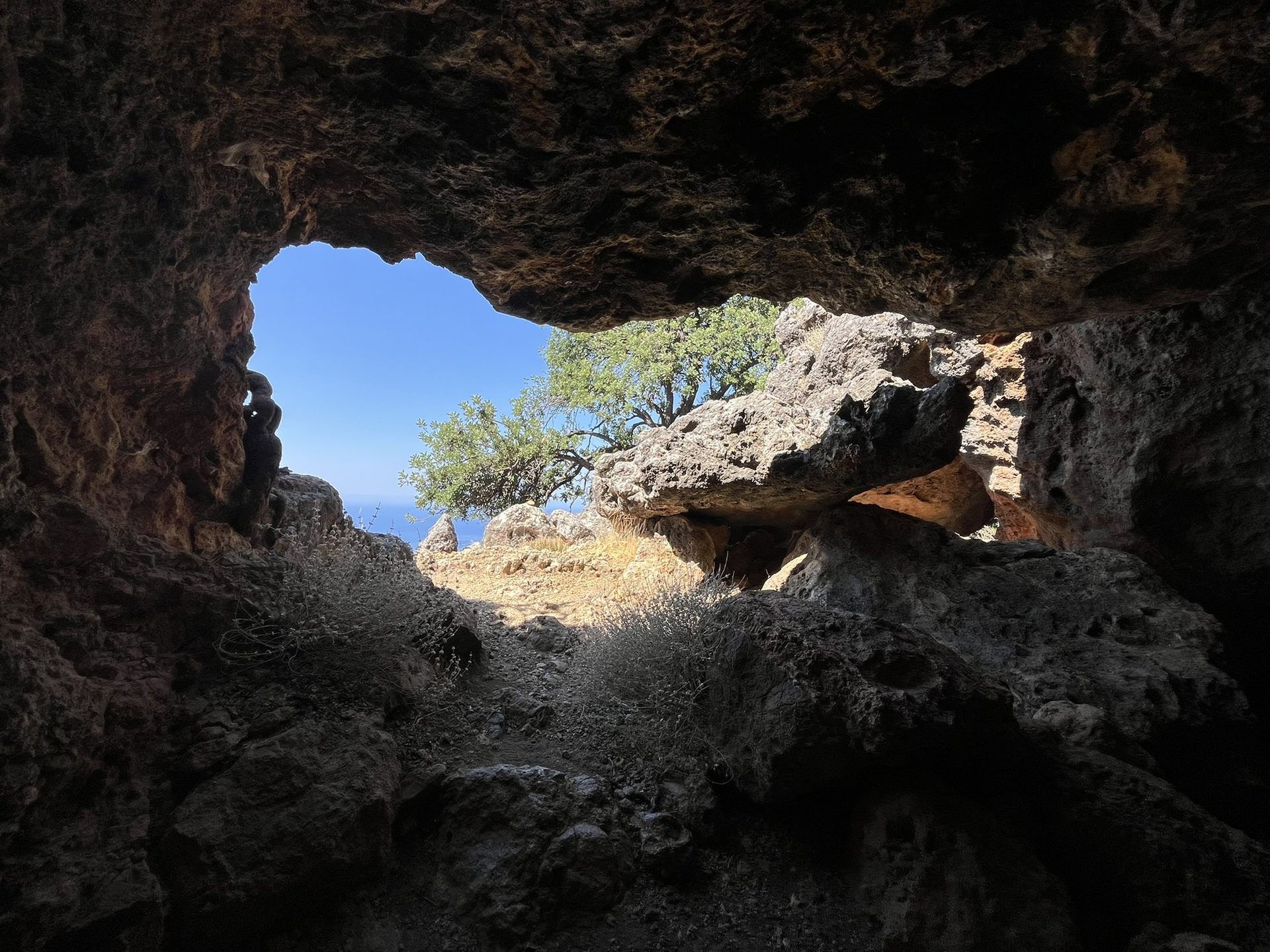
The cave sits at about 300 metres, between Sougia and Koustogerako. Its entrance is split in two by a great block of rock, which is hard to look at without thinking of the stone that Polyphemus rolled across his door.
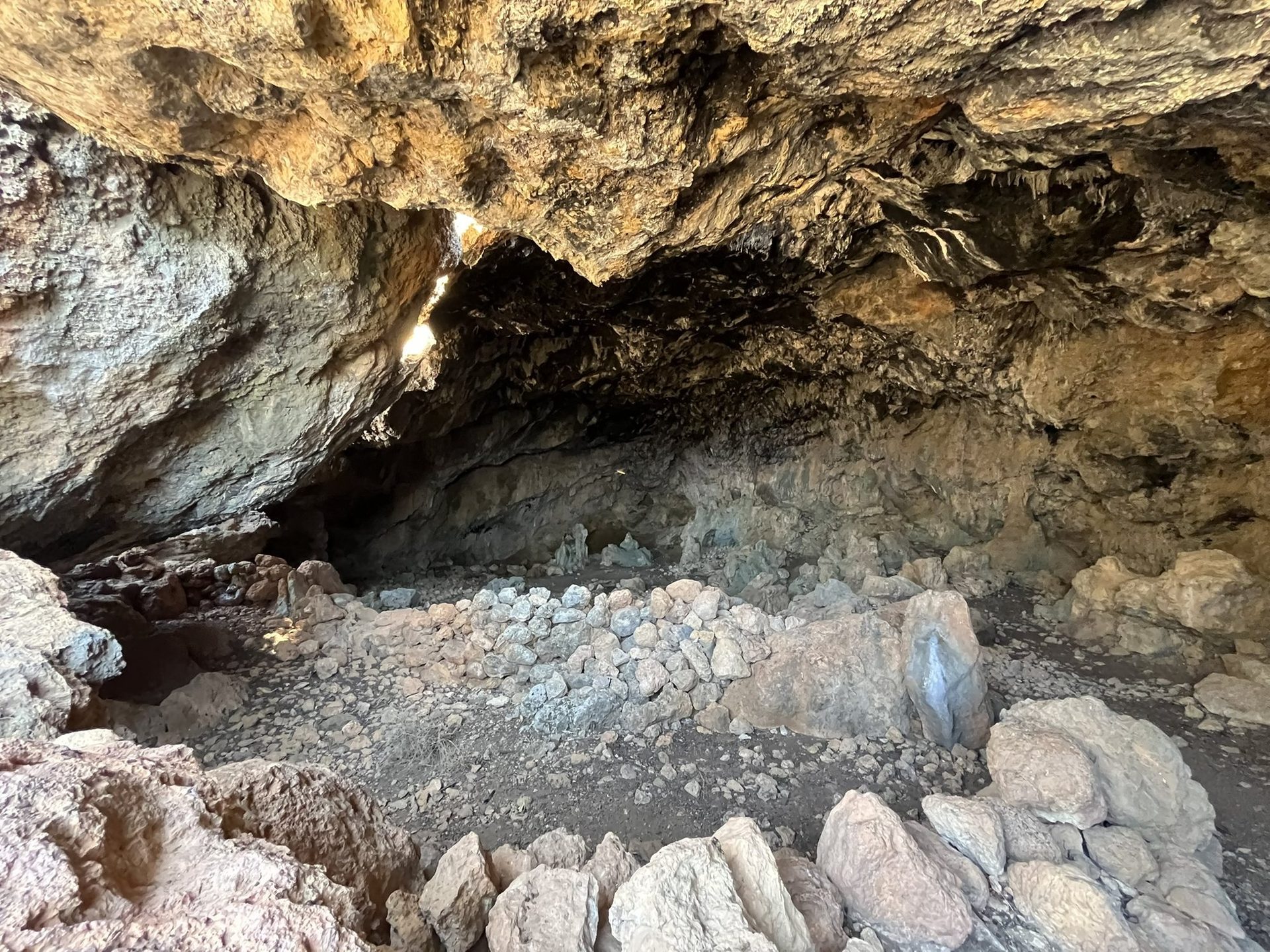
Inside, the cave opens into a wide, low hall. Low walls of piled stones run across the floor. At the back stands a rock formation that people call the throne of Polyphemus. Turn around, and the entrance frames the Libyan Sea.
No one can prove that Homer had this cave in mind. But sitting at its mouth with the sea below, it is not hard to see why someone once decided he did.
A greener walk, down to the sea: the Agia Irini gorge
Our tip
There are two ways up. You can walk from Sougia, climbing out of the village and following the edge of the hills. Or get a lift to Koustogerako and walk from there on a gravel track across open, almost flat grazing land, with sheep and goats around, then down a short path to the cave. From Koustogerako it is about two hours on foot: an hour and a half on the track, then half an hour down to the cave. Only local farm vehicles drive the track, so plan to walk all of it; a rental car is not the way. Either way the route is in full sun. Don’t go in August or at midday, take at least a litre and a half of water each, and remember that the way back is the hard part.
There is little shade on the way. Go early, avoid the midday heat in summer, carry at least a litre and a half of water per person, and wear proper shoes. You won’t need a torch.
Questions walkers ask
Where is the Cyclops cave?
In the hills between Sougia and Koustogerako, at about 300 metres.
How long is the walk?
About two hours each way from Koustogerako: an hour and a half on a gravel track, then half an hour down to the cave.
Can you go in summer?
Yes, but early in the day. The route is in full sun, so avoid August and midday, and take at least a litre and a half of water each.
Sources
- Polyphemus cave, crete.direct
- Polyphemus cave (in Greek), cretanbeaches.com
- The Odyssey (2026 film), Wikipedia
- Homer, Odyssey, Book 9
Last checked October 2026. Times, prices and opening seasons change. Please check before you travel.