Lissos: the walk, the theatre, the boat back
Over the headland from Sougia to a healing sanctuary that has been waiting by the sea for two thousand years.
People used to walk to Lissos because they were ill. They came from all over Crete to its sanctuary of Asklepios, the god of healing, and to the baths by its spring, hoping for a cure. Today you walk there for the view, but the path is much the same.
Stay where this walk begins: AVYSSOS plans to open in Sougia in 2027
The walk
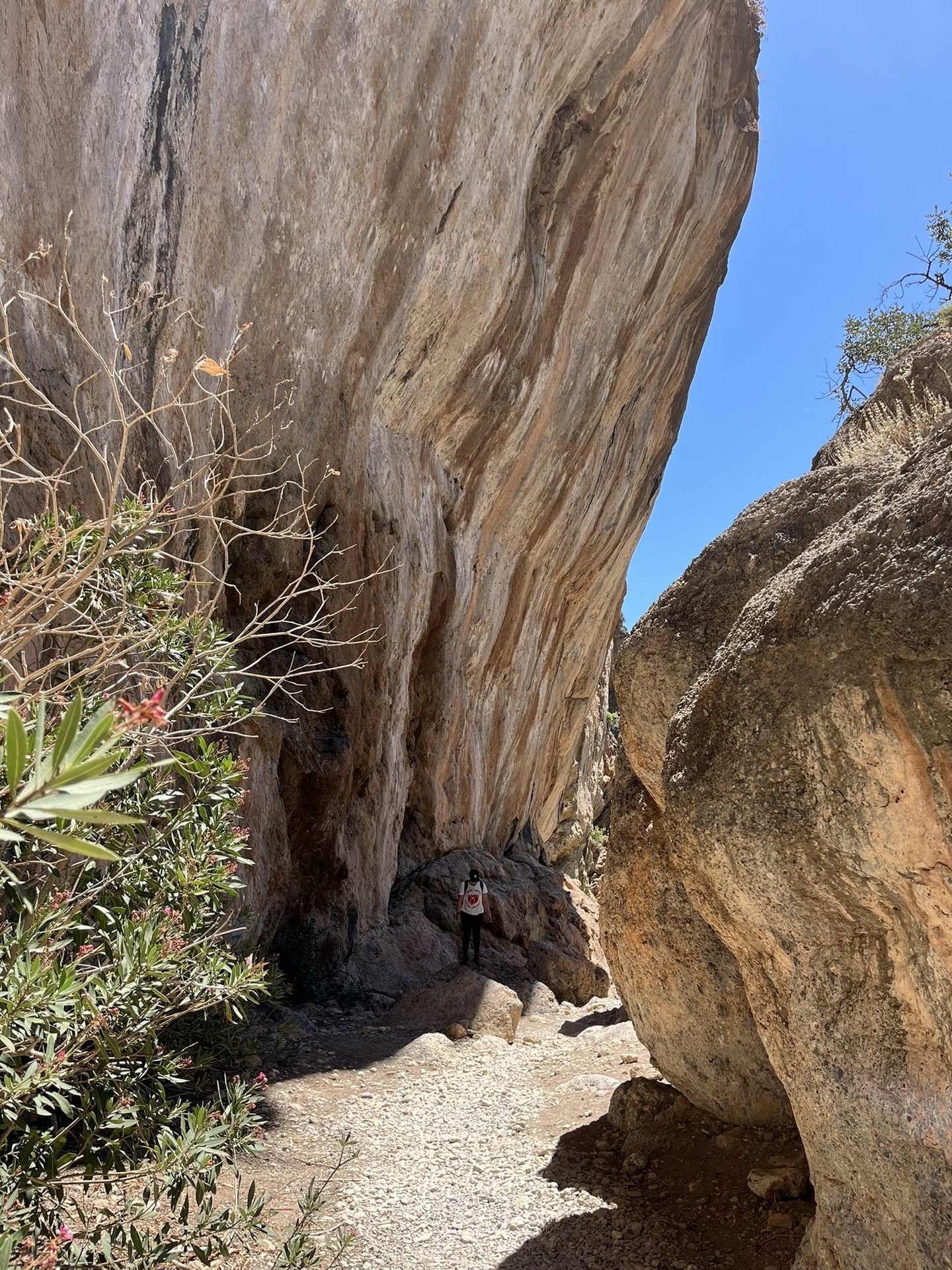
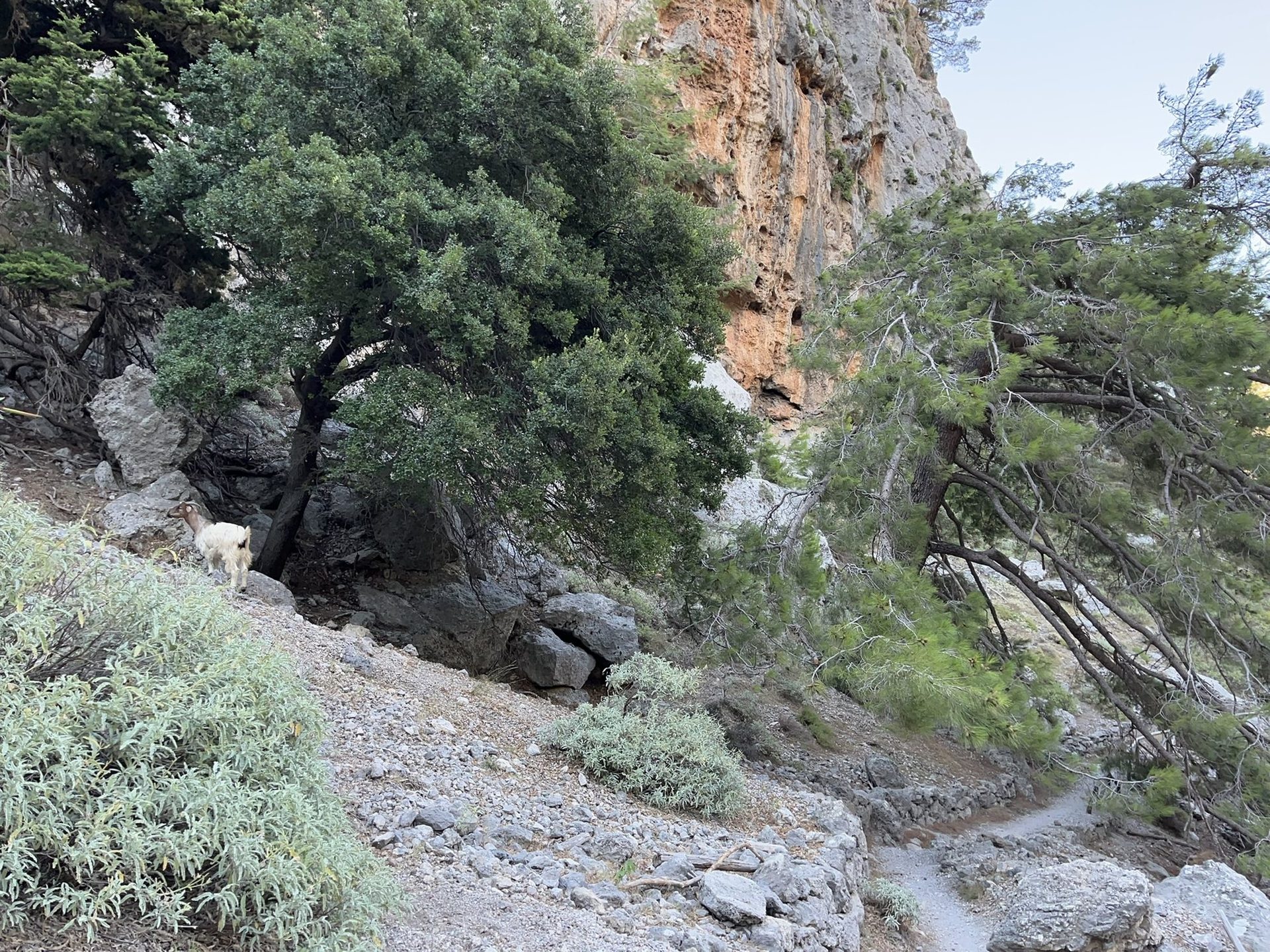
The path starts at Sougia’s small harbour. First it runs through a narrow gorge, mostly in shade, under walls of orange rock, past the signpost among the boulders.
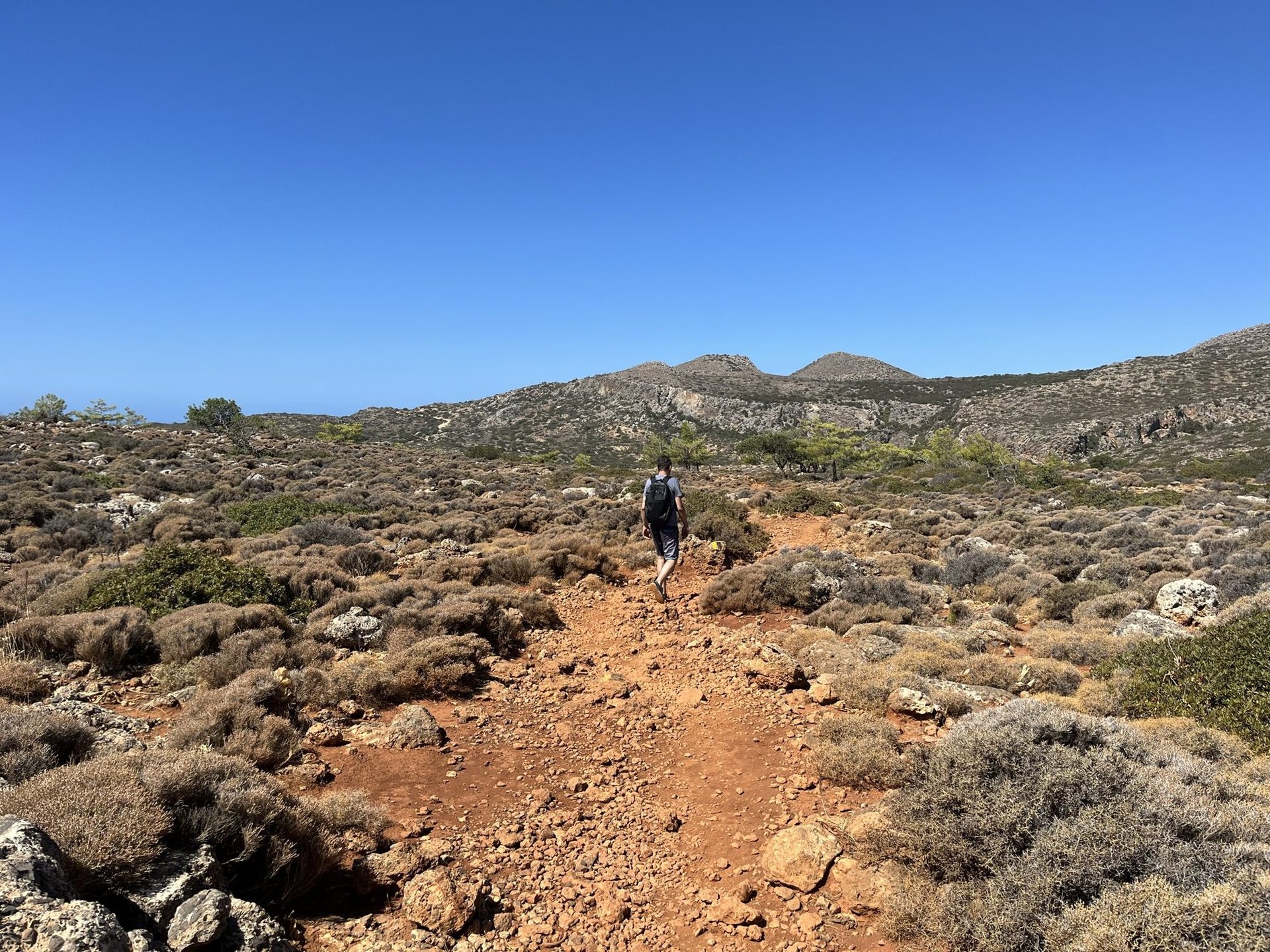
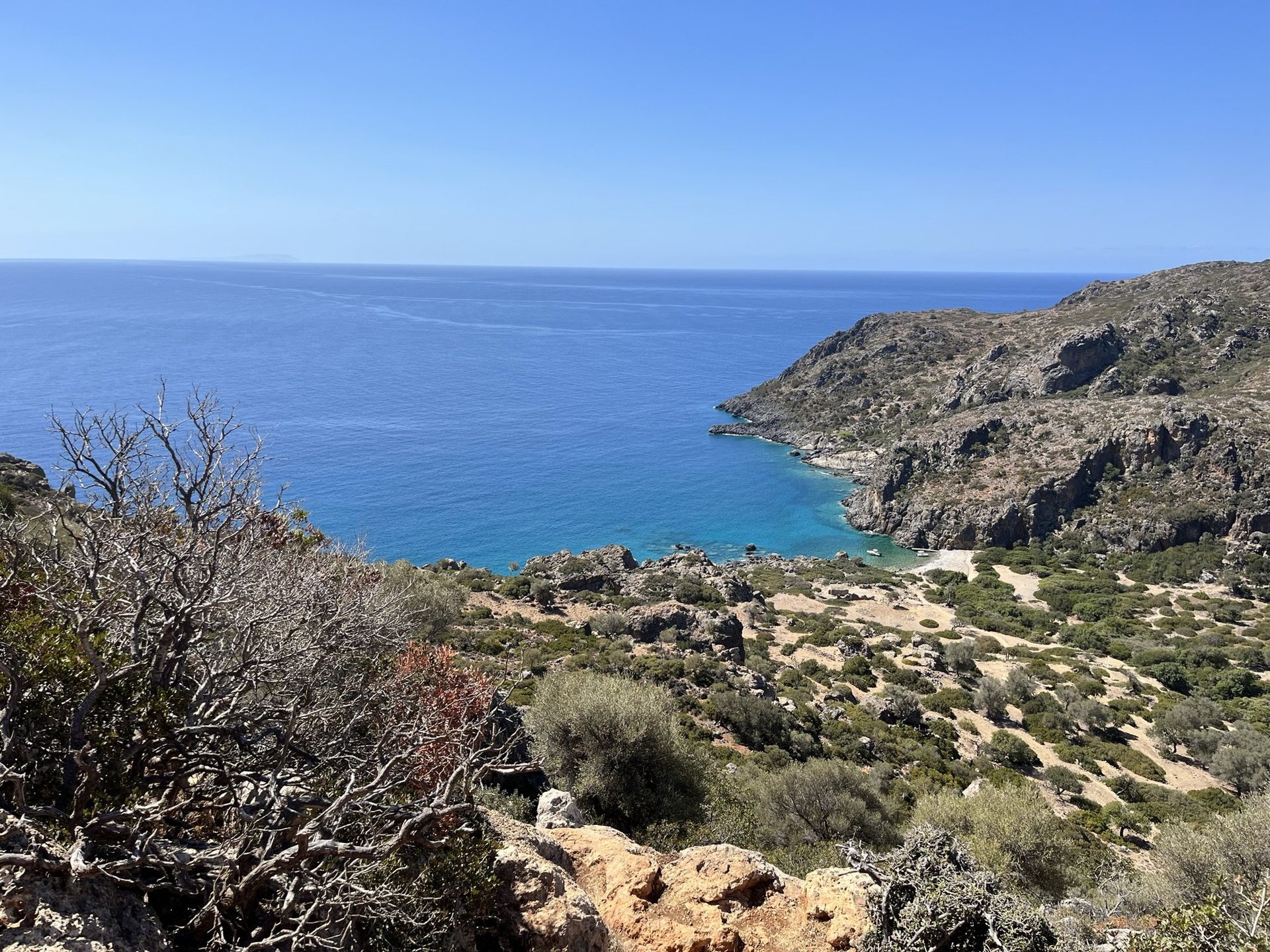
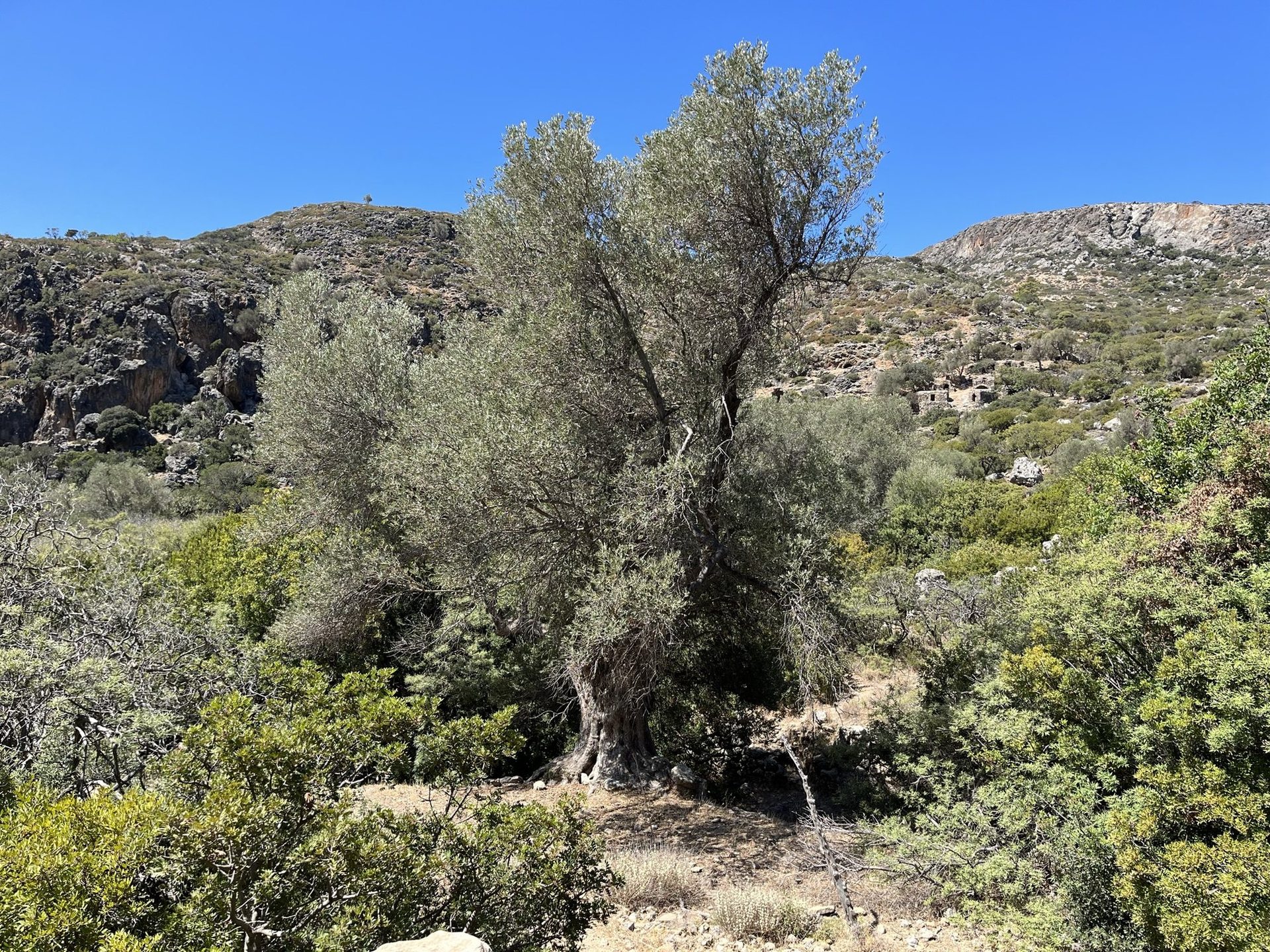
Then it climbs onto the open headland: red earth, low scrub, almost no shade. After the top it drops into a small green valley above a bay. That valley is Lissos.
A harbour of Elyros
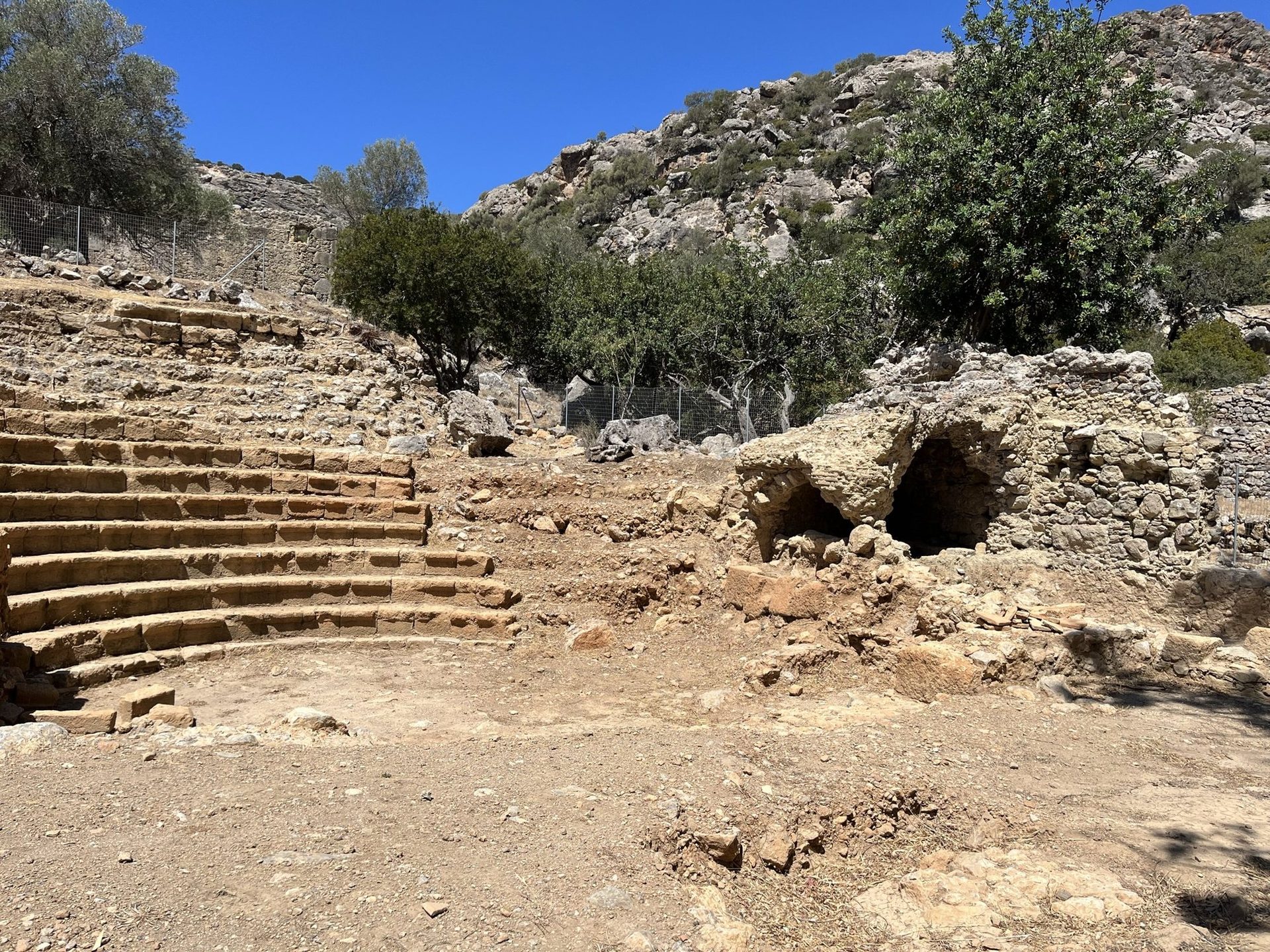
Lissos was one of the two harbours of Elyros, the city on the hill above Sougia. The other was Syia, today’s Sougia. Lissos flourished from the Classical period into late antiquity. It minted its own coins, with Artemis or Dictynna on one side and a dolphin on the other, and it later became the seat of a bishop.
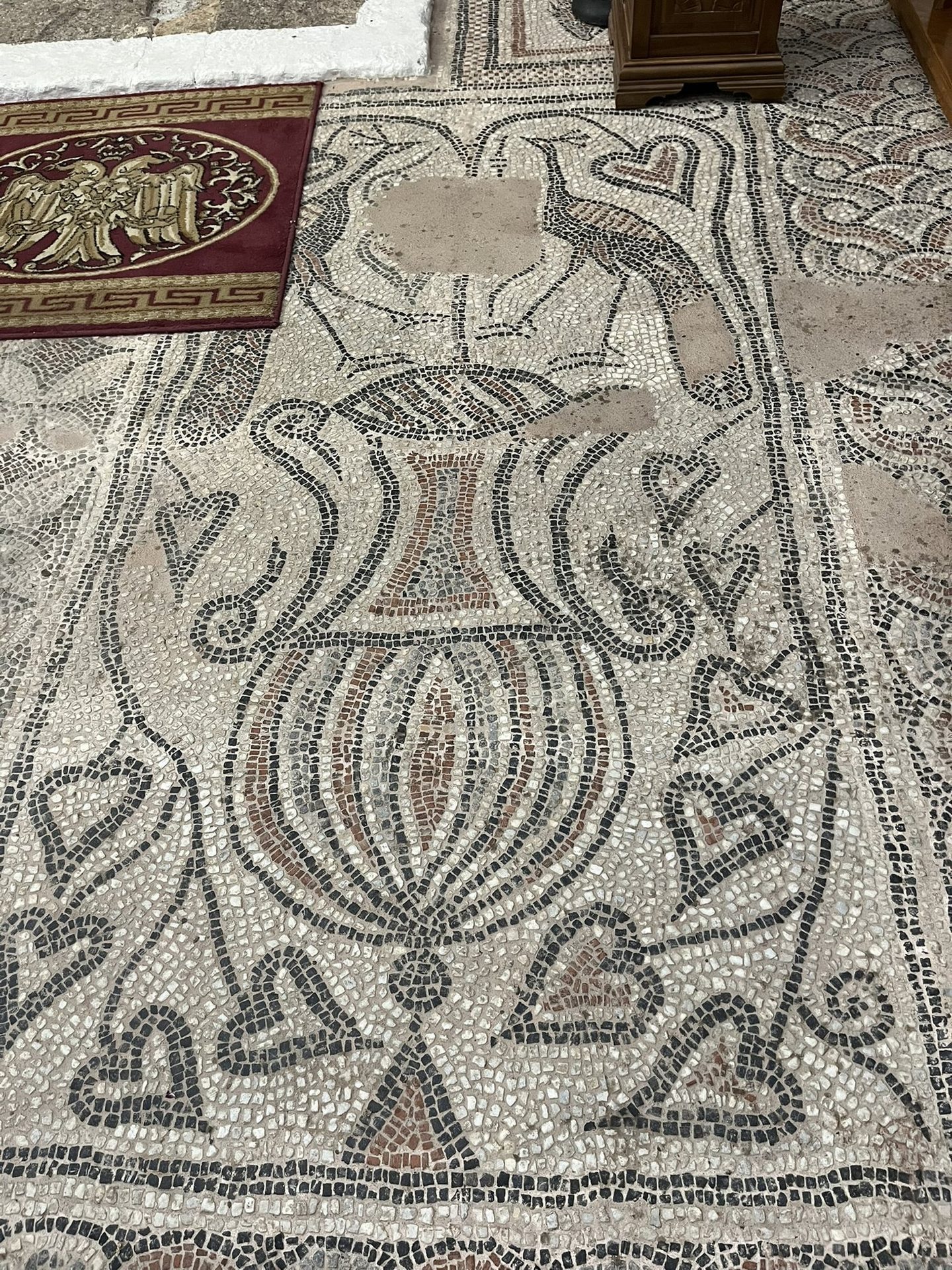
Its heart was the Asklepieion. The mosaic floor of the temple, with animals and geometric patterns, is still in place. Around twenty statues found on the site in 1957, among them Asklepios and his daughter Hygieia, goddess of health, are now in the Archaeological Museum of Chania. Look also for the small theatre and, on the slopes, the vaulted Roman tombs.
The other harbour of Elyros was Sougia itself: the old cities under the pebbles
Churches built from older stones
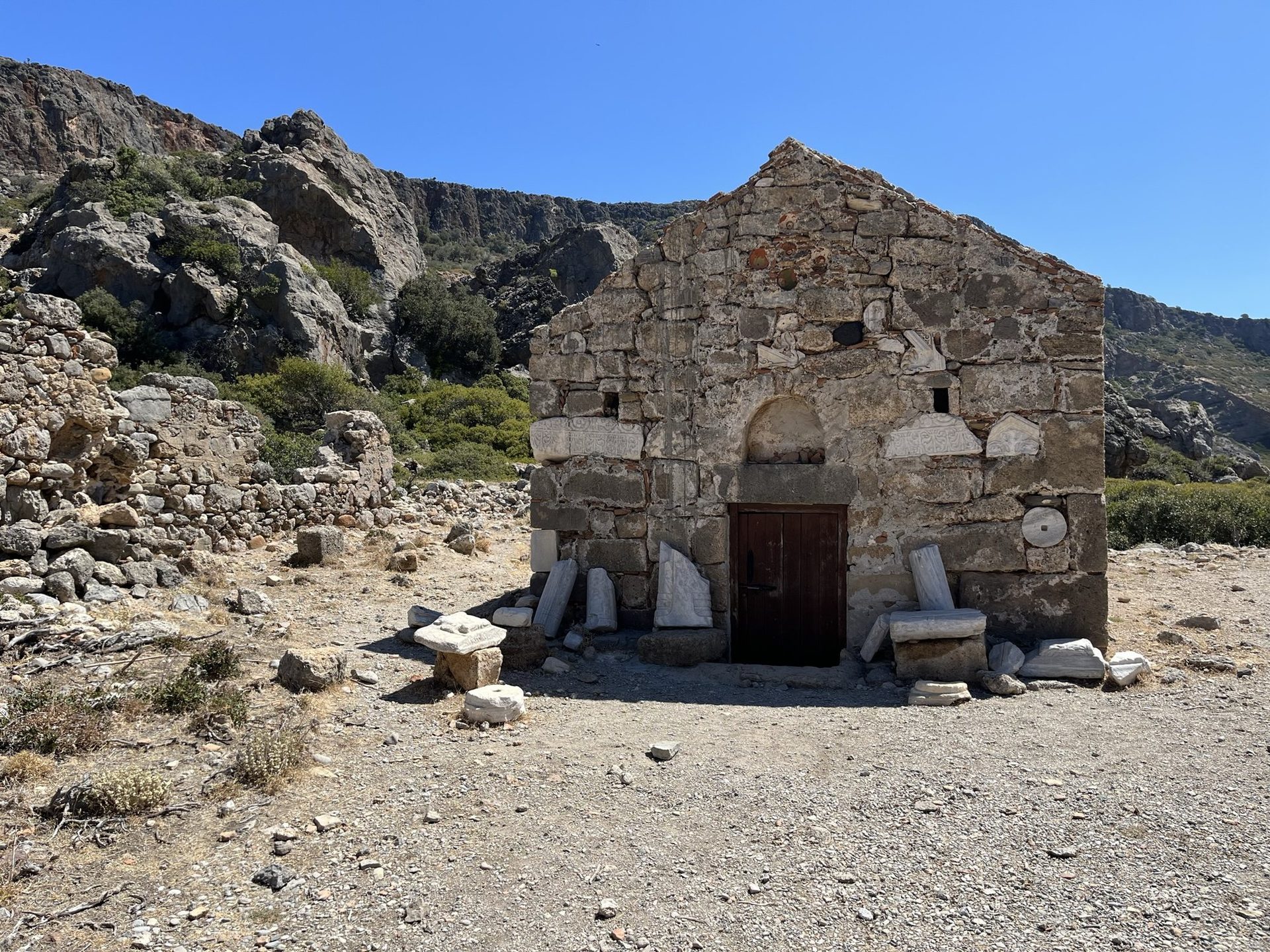
When the old town faded, its stones did not go far. Christians built churches on the ruins of the earlier basilicas, and in the walls you can still see pieces of ancient marble set among the rough stone. The chapel of Agios Kirykos stands among the ruins and celebrates its feast on 15 July. For the feast, people come out on foot and by boat, bringing wine and food. Locals call it the panigiri, and it often goes on late into the night, sometimes until morning. Several villages around Sougia hold one like it in summer.
The coastal path goes on to the west: a day in Paleochora
The way back
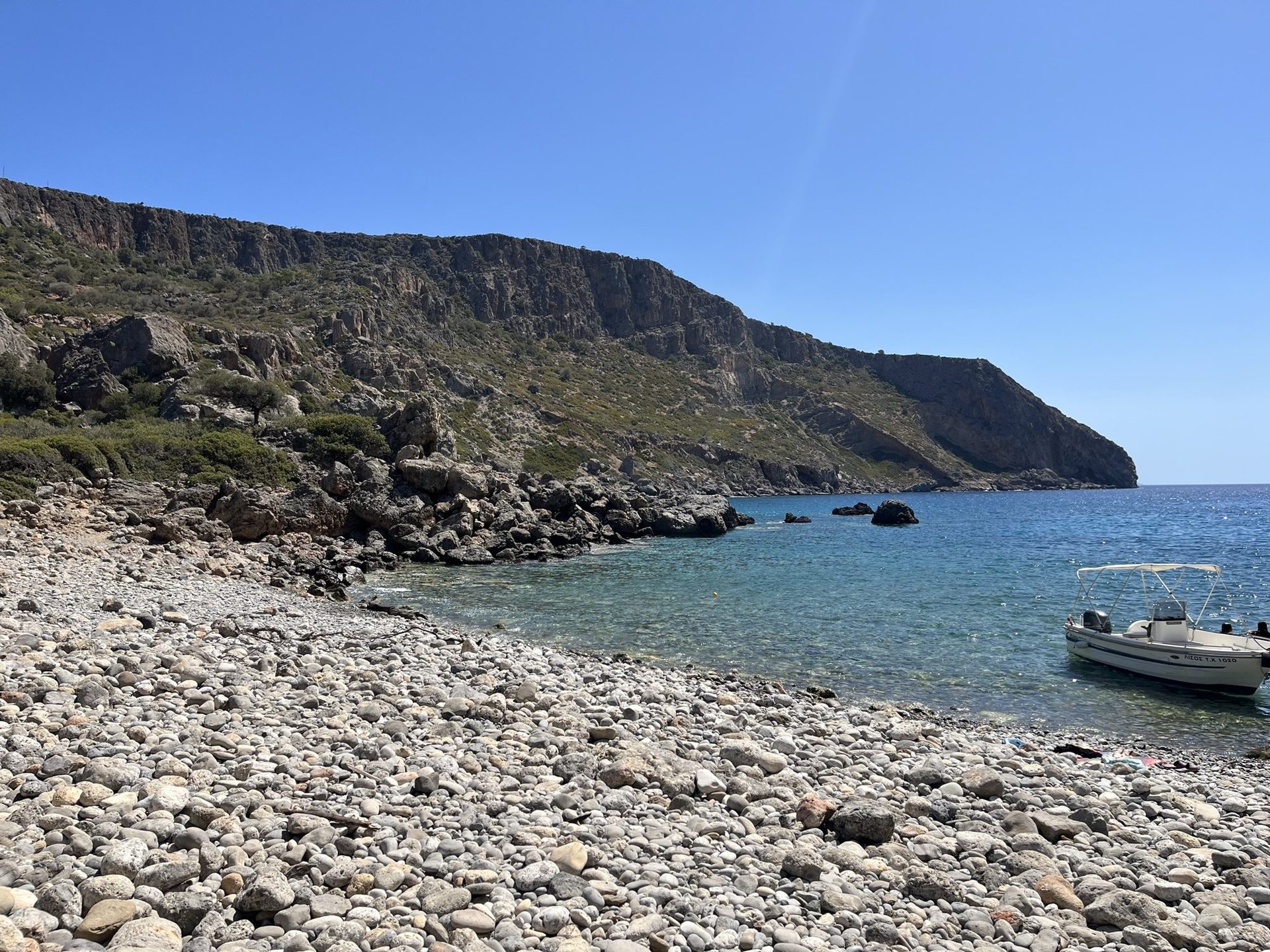
Walk back the same way, or continue west along the E4 towards Paleochora. In summer, boats from Sougia harbour make the trip to Lissos, so you can walk one way and sail the other. Ask at the harbour for the day’s times. Before you leave, swim from the pebble beach below the sanctuary.
In October 2026 the Sougia Cruises board at the harbour listed the taxi boat to Lissos at 10:00 and back from Lissos at 15:30, when at least five people go.
Another walk with a legend: the Cyclops cave above Sougia
Our tip
Start in the morning, never after noon. The first part, through the gorge, is mostly in shade. Then you climb onto the headland, and from there you are in full sun for at least an hour, including the way down to the beach on a loose, sandy, stony path where good shoes matter. At Lissos, see the theatre and the chapel, swim, and take the taxi boat back. It runs from Sougia in the morning and again in the afternoon, and it can come just for you if you call. The times change every year, so ask at the harbour.
There is little shade on the headland. Go early in summer, take water, and wear shoes, not sandals.
Questions walkers ask
How long is the walk from Sougia to Lissos?
About an hour to an hour and a half each way. The path starts at Sougia harbour.
Can you take a boat back from Lissos?
Yes. In summer the taxi boat from Sougia runs in the morning and the afternoon, and it can come on request. Times change every year, so ask at the harbour.
Can you swim at Lissos?
Yes, from the small pebble beach below the sanctuary.
Sources
- Lissus (Crete), Wikipedia
- Lissos, Explore Crete
- Lissos walk, visitsougia.com
- Around Sougia, sougia.info
- Ancient Lissos, cretanbeaches.com
- Agios Kirikos at Lissos, orthodoxcrete.com
- Sougia Cruises board, Sougia harbour
Last checked October 2026. Times, prices and opening seasons change. Please check before you travel.