Kri-kri: the wild goat of Crete, at our door
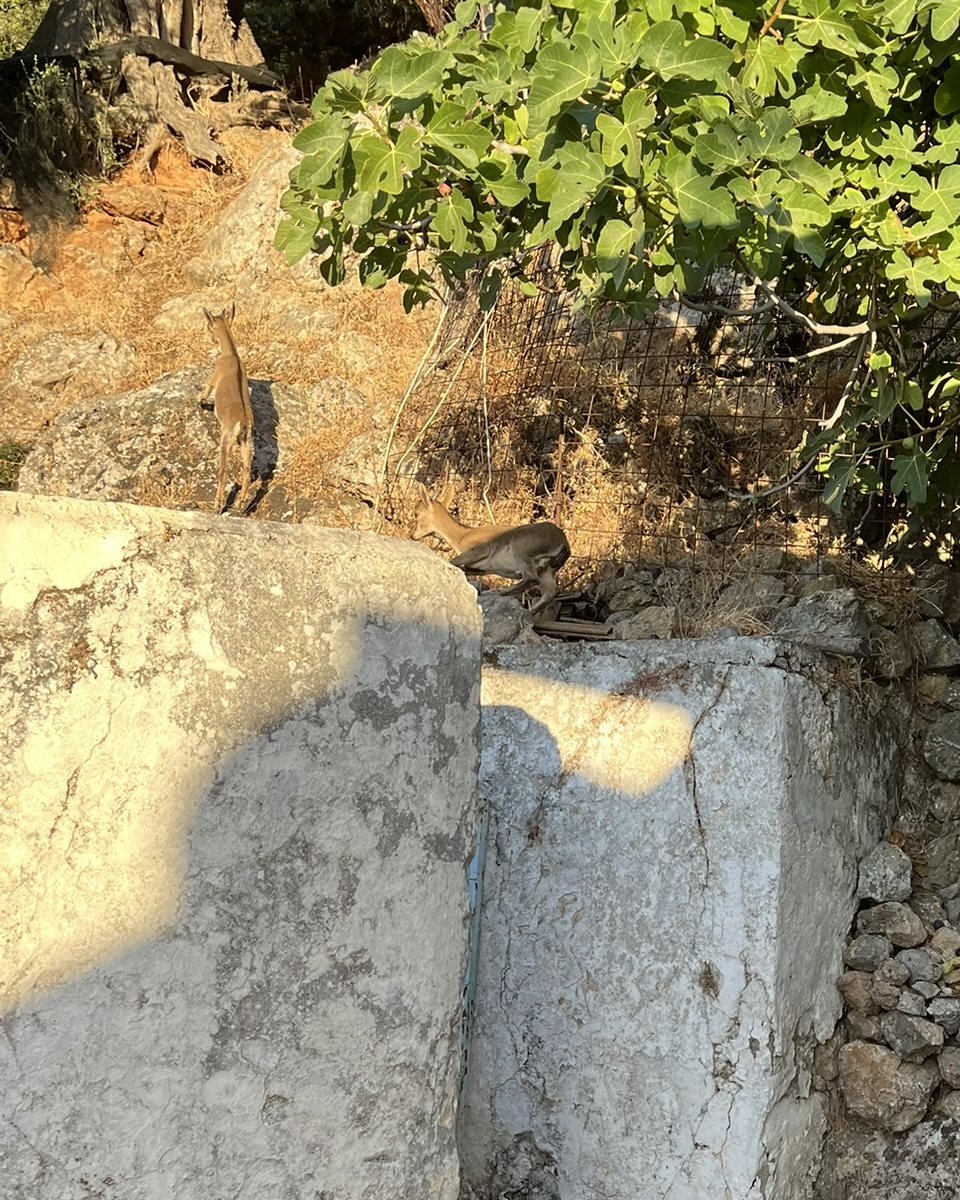
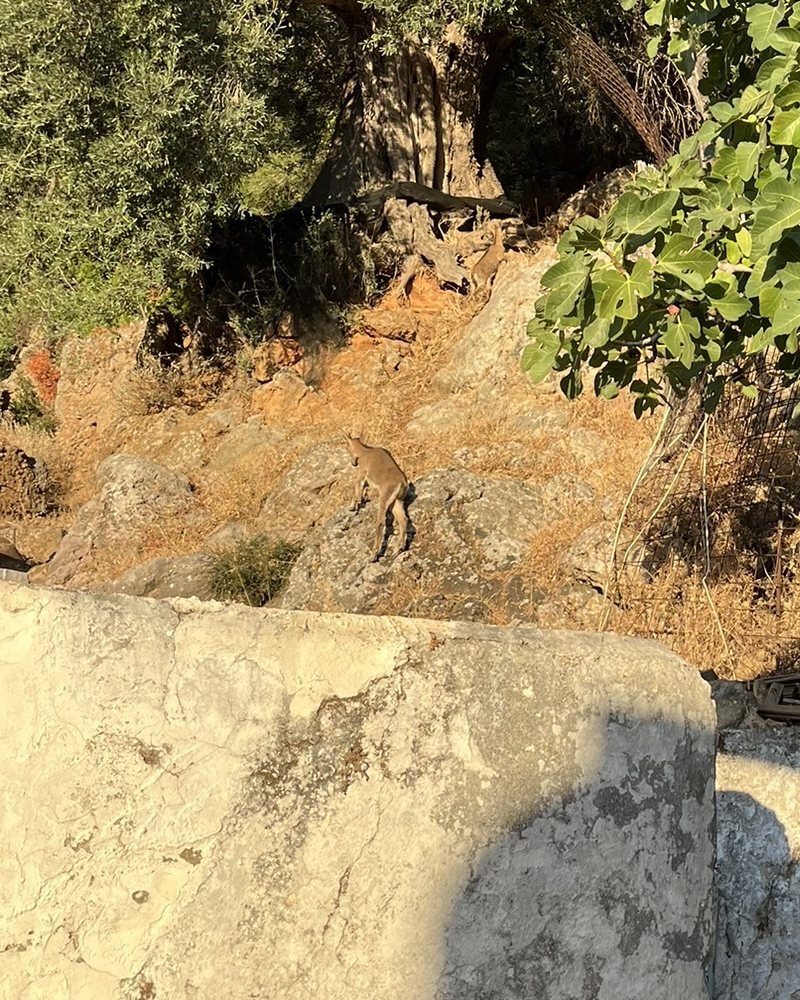
In August 2026 two young agrimi came to the house in Livadas, above Sougia, where we were living. One of them kept coming to the door to look inside.
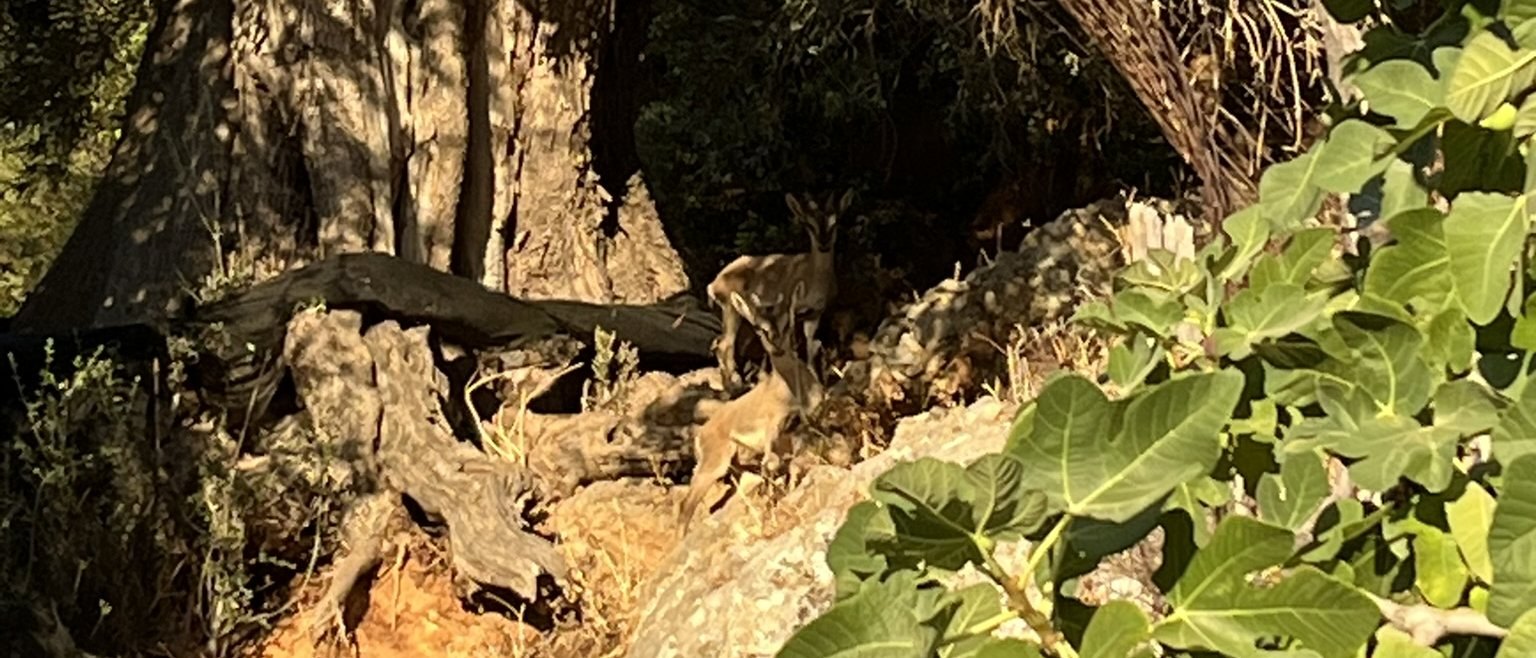
At the door
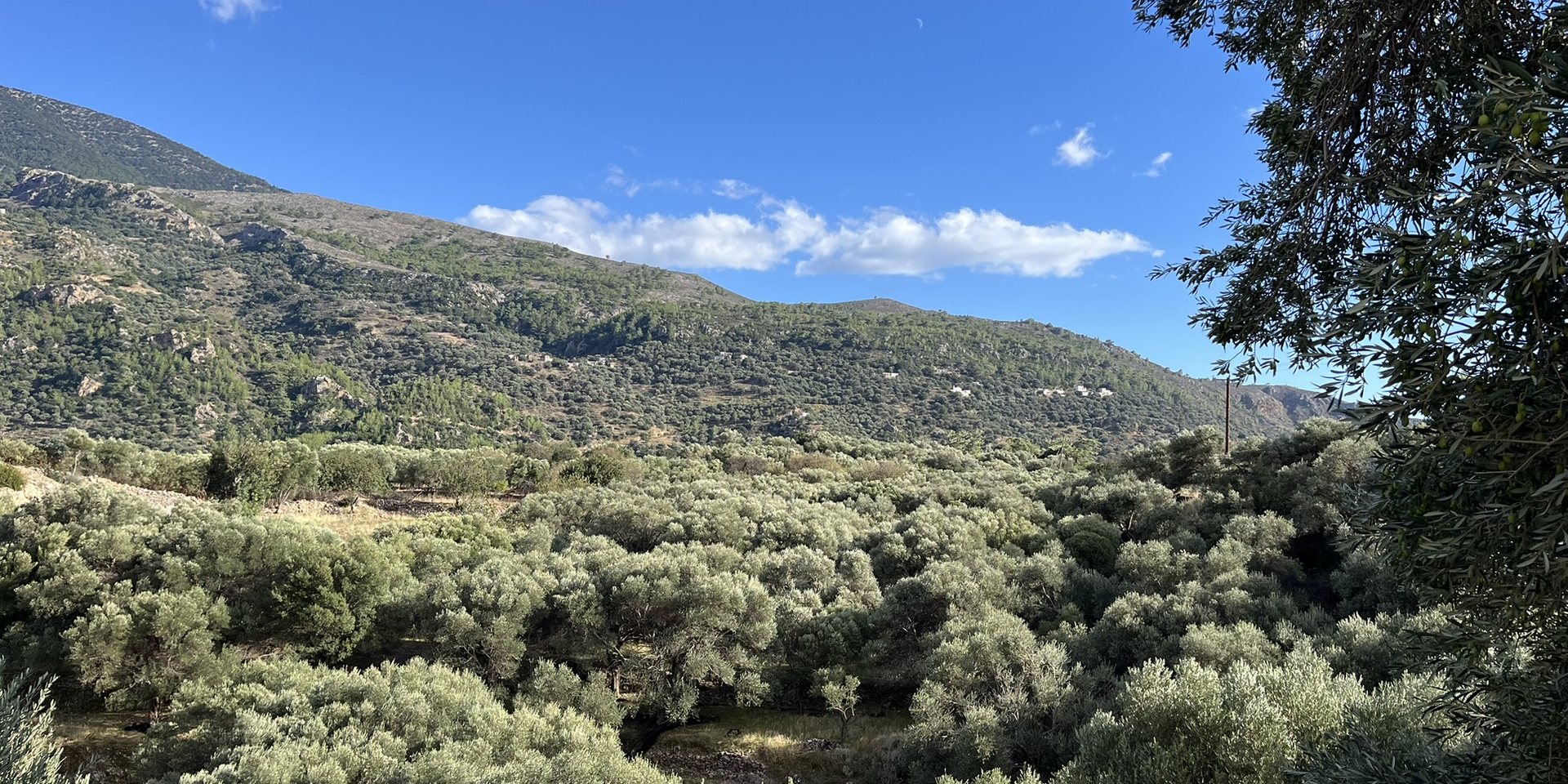
For a while we lived in Livadas, a small village in the hills above Sougia. In August two young agrimi appeared on the slope behind the house, between an old olive tree and a fig tree. One of them kept coming to our door and looking inside.
Most agrimi are born in May. Ours were probably about three months old.
Agrimi or kri-kri
Most visitors know it as kri-kri. Cretans call it αγρίμι, agrimi, a word that simply means wild animal.
A goat that went back to the wild
The agrimi looks like a wild animal and lives like one. Genetics tells a different story. Studies published in 2002 and 2024 show that it descends from early domestic goats. People brought them to Crete thousands of years ago, and some went back to the mountains and stayed wild.
The Minoans knew it well. On a stone vessel from the palace of Zakros, made around 1500–1450 BC, four wild goats are carved beside a mountain shrine. The vessel is now in the Heraklion Archaeological Museum.
Where it lives
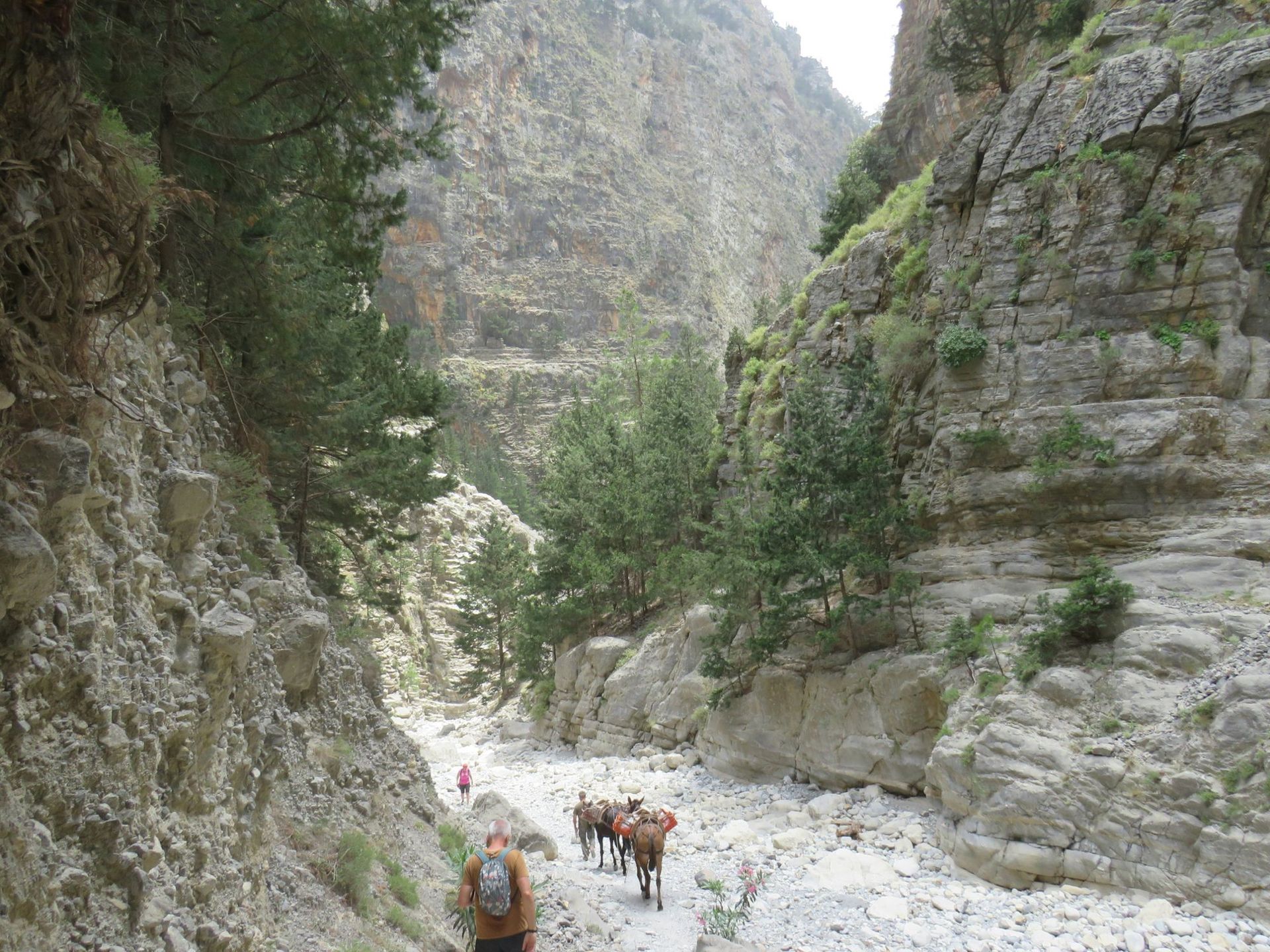
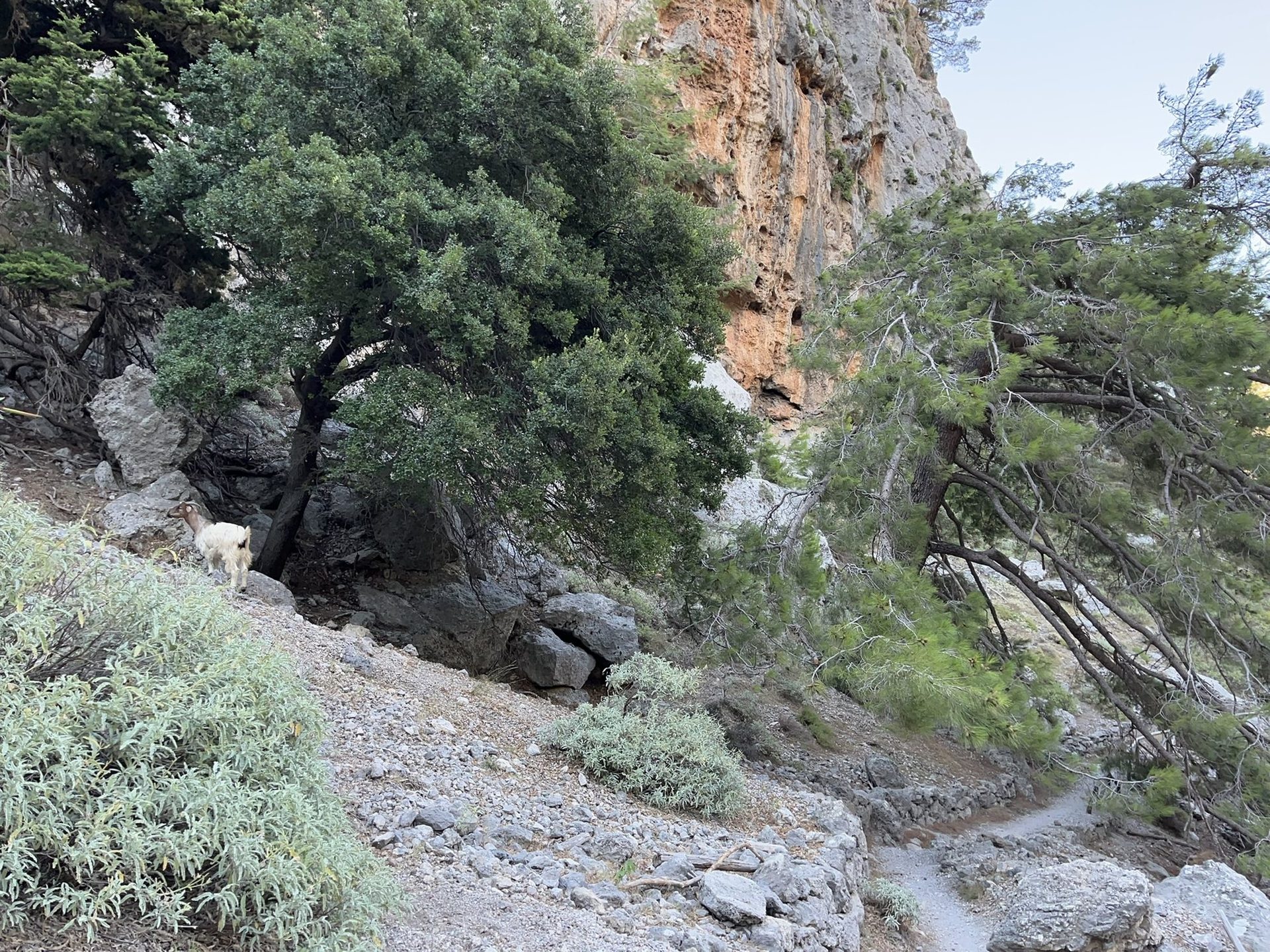
On Crete the agrimi now lives wild only in the White Mountains, the Lefka Ori, above all in and around the Samaria gorge. Protecting it was one of the main reasons the gorge became a national park in 1962. To keep the species safe, animals were also taken to small islands off Crete: Dia, Agioi Theodoroi and Agioi Pantes.
In its report to the European Union for 2013–2018, Greece estimated between 800 and 1,500 agrimi in the White Mountains. Hunting them is forbidden, and the species is protected under EU law.
The main dangers are poaching and interbreeding with domestic goats. Both happen mostly outside the gorge, in the wider mountains.
Were ours pure agrimi?
We can’t say. Livadas is outside the national park, where agrimi and domestic goats can interbreed, and no one can tell for sure from a photograph. To us they looked like agrimi: sand-brown, slender and quick on the rocks.
Where the agrimi lives: Can you walk the Samaria gorge from Sougia? Two ways
Questions walkers ask
Where can you see the kri-kri near Sougia?
In the Samaria gorge and the White Mountains above it. The boat from Sougia stops at Agia Roumeli, at the bottom of the gorge. The animals are shy, so nothing is certain.
Is the kri-kri really a wild goat?
It lives wild, but genetic studies show that it descends from early domestic goats that people brought to Crete thousands of years ago.
Is the kri-kri protected?
Yes. Hunting is forbidden, it is protected under EU law, and the Samaria national park was created in 1962 largely to protect it.
Sources
- Genetic evidence for the origin of the agrimi goat, Journal of Zoology, 2002
- Ancestral and recent introgression in wild and domestic goats, Molecular Ecology, 2024
- Capra aegagrus, Greek report to the EU, 2013–2018
- Cretan Capricorn, Samaria National Park
- Council Directive 92/43/EEC, Annex II
- Peak sanctuary rhyton from Zakros, Rhodes College
- Rhyton with mountain shrine, Heraklion Archaeological Museum
- Κρητικός αίγαγρος, cretanbeaches.com (in Greek)
- Our own photographs, Livadas, August 2026
Last checked October 2026. Times, prices and opening seasons change. Please check before you travel.